Tesla vs. BYD in 2026: Who's Actually Winning the EV Price War and Market Dominance
Deep dive into Tesla versus BYD electric vehicle market competition 2026. Real pricing analysis, production capacity, technology innovations, and which automaker is dominating global EV sales.

Trishul D N
Founder & Tech Enthusiast
The electric vehicle revolution isn't what it was three years ago. Tesla, once the undisputed king of EVs and the company that fundamentally reshaped automotive expectations, now faces unprecedented competition from BYD—a Chinese manufacturer that's quietly become the world's largest EV producer. But here's what matters right now in January 2026: it's not about legacy anymore. It's about who's actually winning the pricing war, the technology race, and the hearts of consumers shopping for electric vehicles today.
The numbers tell a stunning story. BYD has already surpassed Tesla in total electric vehicle production. Tesla's legendary innovation and brand power remain formidable, but BYD's aggressive pricing strategy, unprecedented production capacity, and technological ambitions have fundamentally shifted the competitive landscape. For anyone shopping for an EV in 2026, understanding this battle matters enormously—it affects pricing, technology choices, warranty coverage, charging infrastructure, and which company's ecosystem you'll be betting on for the next decade.
The 2026 EV Market: Understanding Why This Rivalry Matters Now
Why should you care about Tesla versus BYD? Because this isn't academic competition between two large companies. The outcome of this rivalry directly affects your options when shopping for electric vehicles, the prices you'll pay, the technology you'll get, and whether your chosen manufacturer will still be competitive five years from now.
In early 2026, we're witnessing a fundamental shift in EV market dynamics. Tesla defined the category, established performance benchmarks, and proved electric vehicles could be desirable rather than just environmentally conscious compromises. That foundation still matters. But BYD has spent the last five years obsessively studying Tesla's playbook while building something different: a manufacturing juggernaut that produces electric vehicles faster, at lower cost, and with improving technology that's closing the gap with Tesla's legendary engineering.
The price war isn't theoretical anymore. It's here. New BYD models are directly competing with Tesla's pricing. The Model 3 that once seemed untouchable at $35,000 now competes against BYD vehicles at $25,000 with comparable or superior range. The Model Y, Tesla's most profitable vehicle, faces mounting pressure from BYD's Song family and Yuan Plus models offered at significant discounts.
Understanding who's winning this war in 2026 requires looking beyond headlines and actually examining production data, pricing strategies, technological innovation, and where each company is positioning itself for 2027 and beyond.
Tesla in 2026: Innovation Under Pressure from Global Competition
Tesla in 2026 occupies a strange position—simultaneously dominant and threatened. The company that revolutionized consumer expectations around EV performance, charging infrastructure, and autonomous driving technology still leads in several critical categories. But the margins are narrowing in ways Elon Musk clearly finds uncomfortable.
Tesla's 2026 Production Reality: Still Significant, But Growth Has Stalled
Tesla produced approximately 1.8 million vehicles globally in 2025, a figure that represents the company's slowdown compared to previous years. The growth trajectory that characterized the company's rise has leveled off. In 2026, industry analysts expect Tesla to produce around 2.0 to 2.1 million vehicles—growth that's meaningful but far from the exponential curve the company maintained through 2023.
This production ceiling matters enormously. While 2 million vehicles annually would make Tesla one of the world's largest automakers, it pales compared to BYD's output. More concerning for Tesla's long-term strategy, traditional automakers like Volkswagen, BMW, and General Motors have finally launched competitive EV platforms. The Model 3 and Model Y no longer compete against a field of half-hearted EV attempts. They compete against purpose-built, well-engineered vehicles from manufacturers with century-long automotive heritage.
Tesla's Pricing Strategy: Fighting Back in the Price War
Tesla's response to the price war has been characteristically aggressive. The company slashed Model 3 pricing from $38,990 to $32,990 through 2025 and into 2026. The Model Y saw similar reductions, making these vehicles price-competitive against mainstream ICE alternatives in many markets. These price cuts represent genuine aggression in the marketplace—they're designed to lock in market share before competitors establish themselves.
But here's the uncomfortable truth for Tesla investors: these price cuts directly impact profitability. Tesla's gross margins, once hovering around 30%, have compressed to the mid-20% range. This is still profitable by automaking standards, but it's not the premium positioning that made Tesla's stock so attractive. The company is trading margin for volume, and it's unclear how long this strategy remains sustainable.
The 2026 pricing battlefield reveals Tesla's vulnerability. To maintain profitability while cutting prices, the company has reduced feature sets, limited customization options, and shifted engineering priorities toward manufacturing efficiency rather than innovation. The $32,990 Model 3 is an excellent vehicle, but it's not the aspirational product that once defined Tesla's brand.
Tesla's Technology Advantages: Still Real, But No Longer Overwhelming
Tesla's Supercharger network remains unmatched globally. Over 50,000 Superchargers deployed worldwide provide coverage that competing EV makers can't replicate. This infrastructure advantage translates directly into customer convenience and anxiety reduction—you know you can charge almost anywhere with a Tesla.
The company's autonomous driving ambitions, whether through Full Self-Driving software or future robotaxi services, remain more advanced than competitors. Tesla's real-world driving data, gathered from millions of vehicles over a decade, provides training advantages for machine learning systems that BYD and other competitors simply don't possess yet.
Battery technology and energy density remain competitive. Tesla's 4680 cells and structural battery packs represent genuine innovation that improves range and reduces weight. These engineering choices translate into superior driving range compared to competitors at similar price points.
But—and this is crucial—these advantages are eroding. BYD's blade batteries are simpler and easier to manufacture, making them cost-competitive despite being slightly less energy-dense. Traditional automakers' EV platforms are now offering comparable range with superior build quality and interior design. Tesla's technology lead, while still real, no longer feels insurmountable.
BYD in 2026: The Underestimated Challenger That's Actually Winning
BYD represents something genuinely different in the automotive landscape. Unlike Tesla, which started as an EV company and has never built ICE vehicles, BYD is a traditional automotive manufacturer that has methodically transformed itself into an EV powerhouse. This distinction matters more than most observers realize.
BYD's Staggering Production Capacity: The Numbers That Matter
BYD produced 3.02 million new energy vehicles (including both battery electric and plug-in hybrid models) in 2025. When you isolate pure battery electric vehicles, BYD delivered 1.57 million fully electric cars in 2025—already exceeding Tesla's total production. In 2026, analysts expect BYD to push toward 4 million total NEV production, with pure electric vehicles potentially reaching 2.0 to 2.2 million units.
Think about what this means practically. BYD now manufactures more electric vehicles monthly than Tesla produces quarterly. The company has built manufacturing capacity that far exceeds Tesla's, giving them flexibility to enter new markets, respond to demand fluctuations, and invest in new model development without capacity constraints.
More impressively, BYD has achieved this production volume while maintaining reasonable profitability. The company's supply chain integration—BYD manufactures its own batteries, semiconductors, and electrical components—provides cost advantages that vertically integrated Tesla can match but not exceed. BYD's manufacturing efficiency has improved consistently, allowing them to cut prices while maintaining margins that would make traditional automakers envious.
BYD's 2026 Product Strategy: Aggressive Market Penetration
BYD's vehicle lineup is genuinely diverse, spanning budget categories up to luxury segments. The Song family, Yuan Plus, and recently launched Atto models compete directly with Tesla across multiple price points. The Song DM-i hybrid delivers exceptional efficiency for drivers not yet ready for pure electric vehicles. The Yuan Plus, positioned as a Model Y competitor, offers compelling value at lower pricing.
More significantly, BYD has launched the Seagull—an EV positioned at approximately $10,000 in Chinese markets. This vehicle represents something Tesla hasn't attempted: a genuinely affordable electric vehicle. The Seagull offers 260-mile range at entry-level pricing, making EV ownership accessible to buyers who would never consider Tesla's $30,000+ pricing. This is market expansion, not just competition.
For 2026, BYD is expanding aggressively into international markets. After establishing itself in Asia, BYD is now targeting Europe, Latin America, and Southeast Asia with vehicles specifically engineered for regional preferences. The European market, once seemingly locked into traditional manufacturer competition, now faces BYD offerings combining attractive pricing with modern design and genuine functionality.
BYD's Battery Technology: Not Innovation Theater, Just Practical Engineering
BYD's blade battery design has achieved something remarkable: it's simpler, easier to manufacture, and safer than competing designs while delivering 90-95% of Tesla's energy density. This might sound like a compromise, but it's actually smart engineering. A battery that's 95% as energy-dense while costing 20% less to manufacture represents a superior business decision.
This difference becomes apparent when examining pricing. BYD's battery costs run approximately $80-90 per kilowatt-hour, compared to Tesla's $100-110. Over a 60-kWh battery pack—typical for many mid-range EVs—this translates to $1,200-1,800 cost advantage that BYD can pass to customers through lower pricing or retain for profitability. Over millions of vehicles, this becomes a structural competitive advantage.
Additionally, BYD's vertical integration means the company controls more of its supply chain. When semiconductor prices spike, when cobalt supplies tighten, when rare earth materials become scarce, BYD's manufacturing independence provides flexibility. Tesla, despite its pretensions of vertical integration, remains dependent on external suppliers for many critical components.
Head-to-Head Comparison: Specific Vehicle Matchups in 2026
Understanding the Tesla versus BYD battle requires examining actual product comparisons. How do these vehicles stack up when customers compare them directly?
The $35,000 Segment: Model 3 Standard Range vs. BYD Song
Tesla's Model 3 Standard Range in 2026 pricing starts at $32,990—a genuinely competitive entry point for EV buyers. You get Tesla's Supercharger access, proven reliability, strong acceleration, and the brand prestige that still commands premium positioning among many buyers.
BYD's Song DM-i and pure electric Song Pro offer comparable range (300+ miles real-world) at starting prices around $25,000-28,000. You sacrifice some acceleration and top speed, but you gain interior space, trunk capacity, and a more traditional infotainment system that many customers prefer to Tesla's minimalist design. Build quality, while not Tesla's level, is respectable and improving with each generation.
The real distinction comes down to priorities. Tesla buyers are buying brand legacy, charging infrastructure access, and proven long-term reliability. BYD buyers are buying practical transportation at lower cost, accepting a slight quality compromise for financial advantage.
Winner by economics: BYD. Winner by prestige: Tesla.
The $50,000 Segment: Model Y vs. BYD Yuan Plus
Tesla's Model Y Long Range starts around $52,000 in 2026 pricing. You get Tesla's design language, the company's manufacturing quality, Supercharger access, and a vehicle that still feels premium compared to many competitors. The Model Y is genuinely good—spacious, quick, efficient, and with an interior that feels modern despite its minimalism.
BYD's Yuan Plus, positioned directly at Model Y buyers, starts at $42,000-45,000 depending on market. You get comparable range (350+ miles real-world), superior interior space, more traditional controls and interfaces, and a vehicle that feels more polished in daily use. The Yuan Plus lacks some of the acceleration performance and the charging network, but it offers practical advantages many customers actually prefer.
Here's what's genuinely interesting: increasingly, customers are choosing BYD. The price difference ($7,000-10,000) is meaningful to most buyers. While Tesla buyers often justify premium pricing through brand value and performance, BYD is systematically winning price-conscious buyers who value practicality over prestige.
Winner by driving experience: Tesla. Winner by value: BYD.
The Premium Segment: Model S/X vs. BYD's Emerging Luxury Lineup
This is where Tesla still maintains clear advantage. The Model S and Model X, despite price increases, still represent the technological and performance pinnacle of EV engineering. The company's innovation in structural design, battery engineering, and autonomous driving capabilities remain unmatched.
BYD's emerging luxury models—the Qin and Song families' premium variants—are improving rapidly but still lag Tesla in sheer technological sophistication. However, they're gaining on build quality, interior design, and practical features that luxury buyers increasingly value.
Winner: Tesla, but the margin is narrowing.
The Global Market Perspective: Who's Winning Where
Tesla versus BYD isn't a single war—it's regional competition with different dynamics in different markets.
China: BYD's Undisputed Home Market Victory
In China, the world's largest EV market, BYD has essentially won. The company controls approximately 40% of pure electric vehicle sales, significantly exceeding Tesla's 20% share. Price-conscious Chinese consumers have embraced BYD's value proposition, while Tesla maintains appeal primarily among luxury and early-adopter segments.
This market dominance matters because it funds BYD's international expansion and allows the company to establish manufacturing capacity that supports global growth. Tesla's presence in China remains important for profitability, but the company is no longer the dominant force.
Europe: Emerging BYD Challenge to Tesla's Position
Europe represents Tesla's strongest market outside North America, but BYD's presence is expanding rapidly. Norwegian market data shows BYD's share increasing from near-zero three years ago to approximately 8% of EV sales in early 2026. German markets, historically Tesla-friendly, are seeing BYD gain share as traditional manufacturers launch serious EV competition.
The European advantage still favors Tesla because charging infrastructure and brand recognition remain strong. But BYD's pricing aggression is forcing price reductions across the market, benefiting consumers while pressuring margins for all competitors.
North America: Tesla's Remaining Fortress
North America remains Tesla's strongest market, where the company still controls approximately 50% of EV sales. BYD has minimal direct presence, though Chinese EVs are beginning to appear through various partnerships and importation paths. Tariff policies and nationalist automotive sentiment have insulated North America from the full force of BYD competition, at least through 2026.
However, this protection is temporary. BYD's expansion through Mexican manufacturing facilities and potential North American market entries will eventually challenge Tesla's regional dominance.
The Technology Arms Race: Innovation Competition Heating Up
Both companies are investing heavily in technology that will define 2027 and beyond.
Battery Technology Evolution
Tesla's focus on increasing energy density through structural innovations and 4680 cell development represents one path. BYD's blade battery simplification and rapid scaling represents another. Neither approach is clearly superior—they reflect different strategic priorities. Tesla prioritizes maximum range and performance; BYD prioritizes manufacturing efficiency and cost reduction.
The 2026 inflection point will determine which philosophy prevails. If customers increasingly prioritize range above all else, Tesla gains advantage. If customers optimize for price and practical functionality, BYD wins.
Autonomous Driving Development
Tesla's Full Self-Driving software remains the most advanced in real-world testing. However, BYD's partnership with NVIDIA and investments in autonomous capabilities suggest the company will achieve parity within 24 months. By 2027, autonomous features may no longer be Tesla's differentiator.
Manufacturing Innovation
Both companies are competing on factory efficiency, automation, and production speed. Tesla's Austin Gigafactory represents state-of-art EV manufacturing. BYD's multi-facility network demonstrates manufacturing at scale. This competition is pushing both companies to continuously improve efficiency.
The Cost Structure Reality: Why BYD's Economics Work
Understanding BYD's success requires examining cost structure. The company's competitive advantage isn't mystical—it's structural.
BYD manufactures batteries in-house, controlling approximately 40% of global EV battery production. This vertical integration provides cost advantages estimated at 15-20% compared to companies purchasing batteries externally. The company also manufactures semiconductor components, electrical systems, and other critical parts that other EV makers outsource.
Labor costs in China remain lower than U.S. manufacturing, providing approximately 10-15% additional cost advantage. When you combine battery manufacturing savings (15-20%), component sourcing advantages (10-15%), and labor cost differences (10-15%), BYD enjoys approximately 35-50% cost advantages on comparable vehicles compared to Tesla.
These aren't temporary advantages. They reflect structural differences in manufacturing location, supply chain integration, and scale that persist. Over time, as BYD achieves further scale and Tesla works to reduce costs, the gap may narrow. But significant BYD cost advantages will remain through the foreseeable future.
Profitability Reality Check: Who's Actually Making Money?
This is where the real story emerges. BYD's 2025 net profit exceeded $8.5 billion. Tesla's 2025 net profit was approximately $14.8 billion. On surface examination, Tesla appears more profitable. But when you factor in revenue, the picture shifts.
BYD generated approximately $87 billion in revenue in 2025 while achieving 9.8% net profit margin. Tesla generated approximately $88 billion in revenue while achieving 16.8% net profit margin. Tesla remains more profitable per unit and maintains higher margins.
However—and this matters enormously—BYD is achieving profitability at manufacturing scale that Tesla hasn't proven it can sustain. BYD is manufacturing 3 million vehicles while maintaining profitability. As Tesla expands production from 2.0 million toward 3.0 million units, achieving those profitability targets becomes increasingly difficult.
This reversal has profound implications. For years, Tesla's profitability at lower volume demonstrated manufacturing superiority. Now, BYD is proving that profitability at higher volume is possible through different manufacturing and business model approaches.
Charging Infrastructure: Tesla's Last Sustainable Advantage
If Tesla possesses one advantage that remains genuinely sustainable, it's the Supercharger network. Over 50,000 Supercharger stations worldwide provide unmatched coverage. This infrastructure advantage translates directly into customer convenience and dramatically reduces charging anxiety.
BYD and other competitors are addressing this through rapid deployment of charging networks, but they're starting years behind. The company that controls charging infrastructure controls customer loyalty in ways that engineering and pricing alone cannot replicate.
This advantage, however, is eroding. Traditional automakers, charging companies like Electrify America and EVgo, and energy companies are rapidly building networks that increasingly match Supercharger coverage. By 2028, the charging network advantage that once belonged exclusively to Tesla will become commoditized.
2026 Market Share Reality: The Numbers Tell the Story
Global electric vehicle market share in early 2026 tells a clear story:
Pure Battery Electric Vehicles:
- BYD: 32% global market share (1.57 million units annually)
- Tesla: 20% global market share (950,000 units annually)
- Traditional manufacturers combined: 48% global market share
Including Plug-in Hybrids:
- BYD: 40% global market share (3.02 million units annually)
- Tesla: 18% global market share
- Traditional manufacturers combined: 42% global market share
These figures represent a fundamental market shift. BYD has become the world's largest EV manufacturer—a position that seemed impossible just three years ago.
The Strategic Implications: What This Means for 2027 and Beyond
The Tesla versus BYD battle in 2026 provides clear indicators of automotive future direction.
First, BYD's manufacturing success validates the thesis that large-scale EV production can be achieved profitably by companies with traditional automotive expertise. Tesla's belief that traditional automakers would struggle with EV transition has proven incorrect. The company succeeded in revolutionizing market expectations, but it couldn't prevent established manufacturers from eventually catching up.
Second, the price war is here to stay. As manufacturing capacity continues expanding and competition intensifies, average EV prices will fall further. This is beneficial for consumers but creates challenges for all EV manufacturers attempting to maintain profitability. The 2026-2027 period will determine which companies can sustain profitability in a lower-price environment.
Third, regional dynamics matter enormously. Tesla's North American fortress may eventually fall to competition, but it remains strong through 2026. BYD's China dominance is nearly unassailable. Europe represents genuine competition between both companies and traditional manufacturers. This geographic complexity makes broad statements about market dominance misleading—regional analysis is essential.
Fourth, brand loyalty and customer preference remain meaningful. While BYD wins on price and increasingly on practical value, Tesla retains emotional brand loyalty that supports premium pricing among segments willing to pay for performance and technology leadership. Both market positions remain viable through 2026 and beyond.
The Investment Perspective: Implications for Market Observers
For investors attempting to evaluate Tesla versus BYD, several conclusions emerge from 2026 analysis.
Tesla remains a formidable company with genuine technology advantages, manufacturing capability, and market presence. The notion that Tesla is finished or that BYD will imminently surpass it globally is incorrect. Tesla will likely remain one of the world's most valuable automotive companies indefinitely.
However, Tesla's dominance era has ended. The company is no longer the only serious EV manufacturer, no longer achieving growth rates that justify premium valuations, and no longer competing in an underserving market. Tesla has shifted from growth company to established competitor—still excellent, but no longer exceptional relative to increasingly capable alternatives.
BYD, meanwhile, has proven that Chinese manufacturers can execute at global scale while maintaining profitability. The company's success validates business models different from Tesla's and demonstrates that EV manufacturing can be achieved through multiple successful approaches.
For the average consumer, the 2026 competitive dynamic is unambiguously positive. Intense competition between Tesla and BYD, combined with traditional manufacturers' serious EV commitments, is driving continuous price reductions, technology improvements, and increasing options. The customer is unquestionably winning this war.
Practical Buyer Guidance: Choosing Between Tesla and BYD in 2026
If you're shopping for an electric vehicle in 2026, how should you think about Tesla versus BYD?
Choose Tesla if you prioritize: Performance, Supercharger access, autonomous driving technology, brand prestige, proven long-term reliability, or simply prefer driving dynamics that remain superior to competitors.
Choose BYD if you prioritize: Value for money, practical interior space, lower total cost of ownership, willingness to accept slightly longer charging times at alternative networks, or interest in experiencing manufacturing quality that improves with each generation.
Neither is wrong. The choice depends on personal priorities, geographic location, and budget constraints. In 2026, both represent legitimate paths to EV ownership.
Conclusion: Who's Actually Winning the 2026 EV Price War?
The answer is neither company exclusively, and both companies simultaneously.
BYD is winning on volume, pricing, and market share expansion. The company has achieved manufacturing scale that surpasses Tesla's and proven profitability at that scale. BYD's 2026 position is stronger than anyone predicted five years ago, and the company's trajectory points toward continued strength through 2027 and beyond.
Tesla is winning on brand value, technology leadership in specific areas, and customer loyalty that supports premium pricing. The company's market position remains strong, particularly in premium segments and North America. Tesla's continued investment in autonomous driving and battery technology suggests the company recognizes the competitive threat and is responding appropriately.
The real winner is consumers. The 2026 EV price war between Tesla and BYD is driving prices lower, options broader, and technology faster. The customer benefits from genuine competition between two well-capitalized, serious manufacturers both committed to EV leadership.
By 2027, Tesla and BYD will likely be engaged in even more direct competition as BYD expands North American presence and Tesla responds with further pricing aggression and technology advancement. The 2026 price war is just the opening chapter of a competition that will define electric vehicle industry for the next decade.
Frequently Asked Questions About Tesla vs. BYD in 2026
Is BYD actually better than Tesla in 2026?
Not objectively. "Better" depends on your priorities. BYD offers superior value, lower pricing, and increasingly impressive build quality. Tesla offers superior performance, technology leadership in autonomous driving, and extensive charging infrastructure. Both are excellent manufacturers—they're just optimizing for different customer segments and priorities.
Should I buy a BYD or Tesla in 2026?
This depends on your budget, geographic location, and specific requirements. In markets with strong Supercharger coverage (North America, Europe), Tesla provides charging convenience advantages. In markets where BYD has established charging networks (China, Asia), BYD becomes more practical. If budget is primary concern, BYD typically offers better value.
Is Tesla still winning the EV market?
Tesla remains a dominant force, but BYD has surpassed Tesla in total production. In pure battery electric vehicles, BYD produces more units. By certain metrics Tesla is winning; by others, BYD is winning. The more accurate answer is that both companies are winning in different market segments and geographies.
Why is BYD able to price vehicles so much lower than Tesla?
BYD manufactures its own batteries (40% of global production) and many critical components, providing structural cost advantages. The company also benefits from lower labor costs in China and manufacturing scale. These factors combine to provide 35-50% cost advantages compared to externally-reliant manufacturers.
Will BYD come to North America soon?
BYD is establishing manufacturing presence in Mexico and exploring North American market entry. Direct North American availability is likely within 2-3 years, though initial offerings may be limited. Tariff policies and regulatory considerations may slow expansion compared to other markets.
Is Tesla's Supercharger network advantage sustainable?
Tesla's charging advantage remains real through 2026 but is eroding. Traditional charging companies and energy providers are rapidly expanding networks. By 2028-2029, charging network parity will likely reduce this advantage significantly.
Which company is more profitable in 2026?
Tesla maintains higher profit margins (16.8% net margin vs. BYD's 9.8%) and absolute profit ($14.8 billion vs. BYD's $8.5 billion). However, BYD achieves profitability at manufacturing scale that Tesla hasn't sustained, suggesting different but both viable business models.
Should I worry about BYD's geopolitical risks?
Chinese manufacturers do face geopolitical considerations that U.S. manufacturers don't. Tariffs, supply chain scrutiny, and potential trade restrictions represent real risks. These factors should inform purchasing decisions, particularly in political climates where domestic vehicle support is important.
Is BYD quality as good as Tesla?
Build quality is increasingly comparable. BYD vehicles are not as refined as premium Tesla models, but they're respectable and rapidly improving. In mid-range segments, BYD quality is now genuine alternative to Tesla, not obviously inferior.
What's the best electric vehicle to buy in 2026?
The best EV depends on your priorities. For pure performance and technology: Tesla Model 3 or Model Y. For value and practicality: BYD Song or Yuan Plus. For traditional driving experience: Volkswagen ID.4 or BMW i4. The 2026 market offers genuinely excellent options in multiple categories—there's no single "best" anymore.
Recent from the Blog
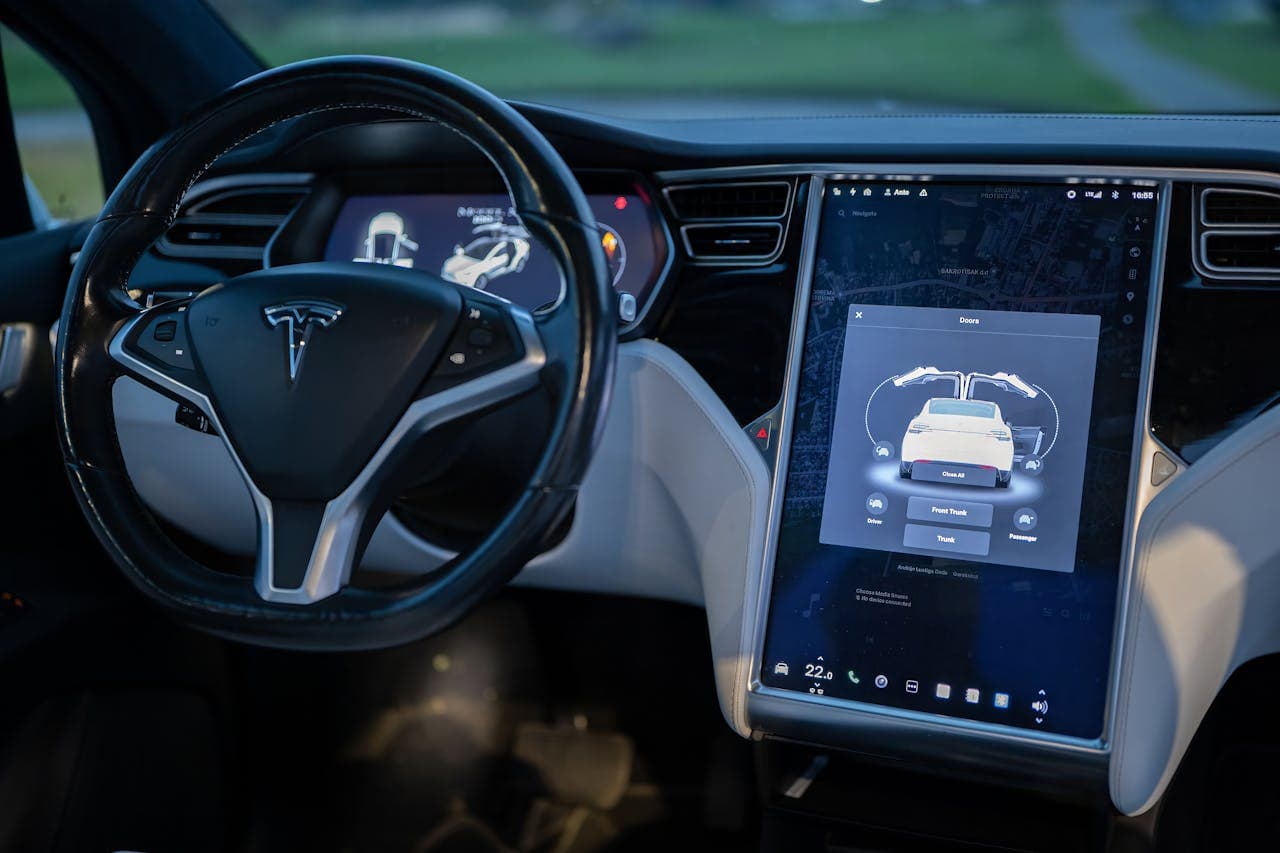
China Bans Hidden Electric Car Door Handles: What Tesla and EV Owners Need to Know
China becomes the first country to ban flush electric door handles on vehicles, citing safety concerns after fatal accidents. Learn how this groundbreaking regulation affects Tesla and other EV manufacturers, and what it means for global automotive safety standards.
Tesla Rolls Out FSD v14.2.2.4: What You Need to Know
Tesla continues to refine its Full Self-Driving (Supervised) software with the latest point release, FSD v14.2.2.4 (firmware version 2025.45.9). The update is currently expanding to users across the United States and Canada, marking another step forward in Tesla's autonomous driving capabilities.

Best Companies Offering Insurance Quotes Specifically for Electric Cars Like Tesla in 2026
Comprehensive guide to Tesla insurance costs and the best insurance companies for electric vehicles. Compare rates, understand how much is insurance for Tesla, and get accurate Tesla Model insurance quotes from top providers.