Tesla Rolls Out FSD v14.2.2.4: What You Need to Know
Tesla continues to refine its Full Self-Driving (Supervised) software with the latest point release, FSD v14.2.2.4 (firmware version 2025.45.9). The update is currently expanding to users across the United States and Canada, marking another step forward in Tesla's autonomous driving capabilities.
Trishul D N
Founder & Tech Enthusiast
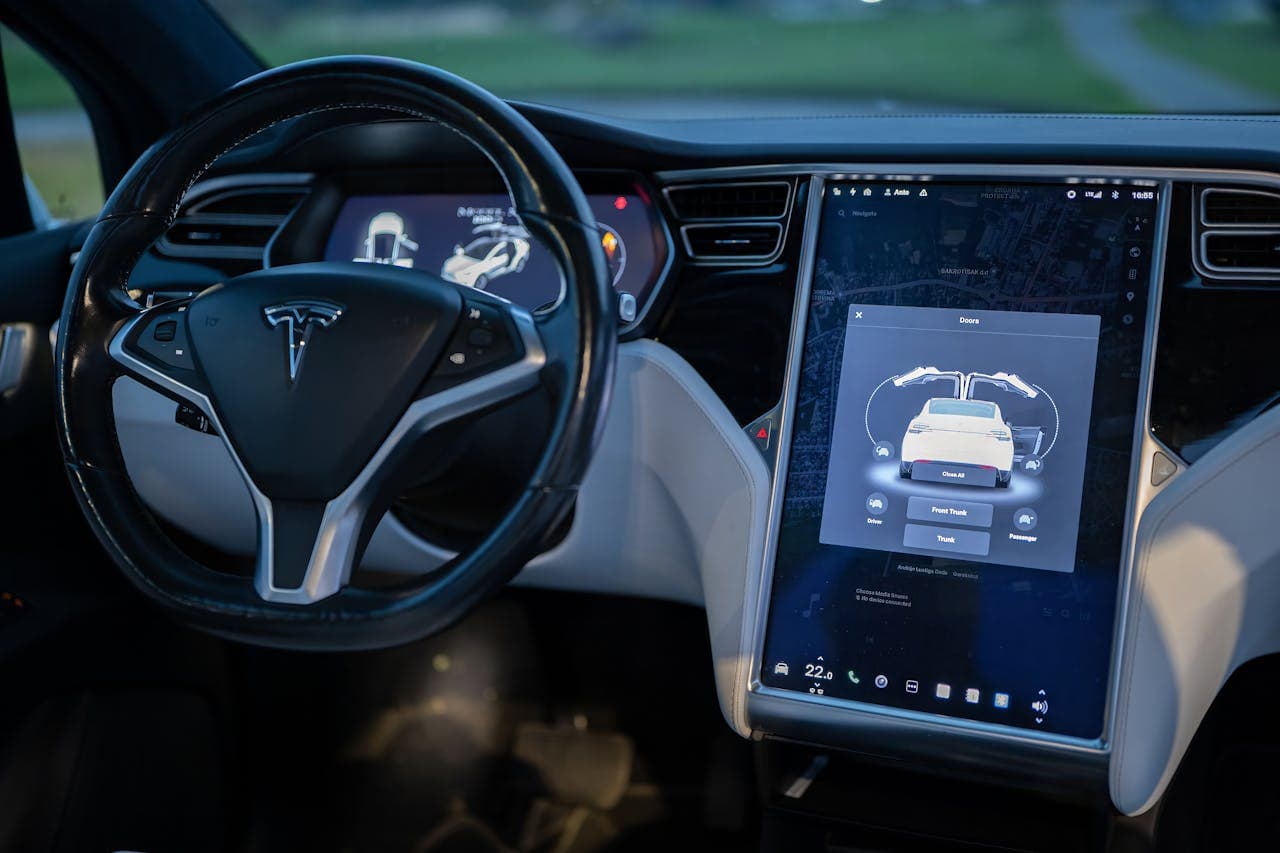
Tesla has begun expanding its latest Full Self-Driving (Supervised) software update, version 14.2.2.4 (firmware 2025.45.9), to Hardware 4 vehicles across North America. This incremental release arrives as the electric vehicle manufacturer prepares for a significant strategic shift—transitioning to a subscription-only model for FSD starting February 14, 2026. For Tesla owners currently using or considering FSD, understanding what this update brings and how it fits into Tesla's broader autonomous driving roadmap has never been more critical.
Understanding the FSD v14.2.2.4 Software Update Rollout
According to real-time tracking data from TeslaFi.com and Tessie.com, approximately 3% of Tesla's FSD-enabled fleet had received the v14.2.2.4 update by late January 2026. Most users are upgrading from the previous v14.2.2.3 release, which was deployed just eight days earlier. This rapid iteration cycle demonstrates Tesla's commitment to continuous improvement through incremental software refinements.
The timing of this release is particularly significant. With Tesla officially ending the one-time $8,000 FSD purchase option on February 14, 2026, the company is doubling down on its $99 monthly subscription model. This strategic pivot comes as Tesla disclosed for the first time in its Q4 2025 earnings report that it has reached 1.1 million active FSD subscribers and purchasers globally—a 38% year-over-year increase from 800,000 in Q4 2024. However, this represents only about 12.4% of Tesla's approximately 8.9 million vehicles delivered to date, indicating massive untapped potential for subscription growth.
Complete List of FSD v14.2.2.4 Features and Improvements
While the official release notes for FSD v14.2.2.4 remain unchanged from version 14.2.2.3, the cumulative improvements in the v14.2 series represent some of the most significant advances in Tesla's autonomous driving capabilities to date. Here's what Hardware 4 (AI4) users can expect:
Advanced Neural Network Vision System Enhancements
Tesla has fundamentally upgraded the neural network vision encoder in FSD v14.2, leveraging higher resolution features to improve critical driving scenarios. The enhanced computer vision system delivers measurably better performance in:
- Emergency vehicle detection and response: The system now more accurately identifies police cars, fire trucks, and ambulances, with improved capabilities for pulling over or yielding appropriately
- Road obstacle identification: Enhanced recognition of road debris including tires, tree branches, boxes, and other objects that could pose hazards
- Human gesture interpretation: Better understanding of hand signals from traffic officers, construction workers, and pedestrians directing traffic
This vision upgrade represents a fundamental shift from previous FSD versions, as the neural network can now process visual information at higher fidelity before making driving decisions.
Revolutionary Arrival Options for Destination Parking
One of the most user-facing improvements in FSD v14.2.2.4 is the comprehensive Arrival Options system. Tesla owners can now specify exactly where they want their vehicle to stop or park when arriving at a destination:
- Parking Lot: Directs the vehicle to find and park in a designated parking area
- Street Parking: Instructs FSD to locate curbside parking on public streets
- Driveway: Enables automatic driveway parking for residential destinations
- Parking Garage: Navigates through multi-level parking structures
- Curbside Drop-off: Perfect for Robotaxi-style passenger drop-offs
These preferences are intelligently saved for each specific destination, and Tesla's reasoning model assesses suitable options to select an intuitive default. The navigation pin automatically adjusts based on your selected Arrival Option, eliminating the guesswork from complex parking situations.
Five-Tier Speed Profile System: From Sloth to Mad Max
FSD v14 introduced a complete overhaul of speed control, replacing manual mph/kph offsets with five distinct driving "personalities." This system allows Tesla owners to customize their FSD experience based on road conditions, traffic, and personal preferences:
Sloth Mode - The most conservative profile, strictly adhering to speed limits. Sloth drives under the posted limit and makes minimal lane changes. Tesla has made this the default profile for new FSD users to ease them into the autonomous driving experience and reduce nervousness about the system exceeding speed limits.
Chill Mode - A relaxed profile that stays in slower lanes and drives at or slightly above the speed limit with conservative lane selection. Ideal for casual driving when you're not in a hurry.
Standard Mode - The balanced middle ground designed to replicate average driver behavior. Standard typically targets speeds 5-10 mph over the posted limit when traffic and road conditions allow, adjusting dynamically to match surrounding traffic flow.
Hurry Mode - An assertive profile that drives faster and makes more frequent lane changes. Hurry typically targets speeds 10-15 mph over the limit when safe and legal conditions permit.
Mad Max Mode - The most aggressive setting, reintroduced in FSD v14 after being retired in earlier Autopilot versions. Mad Max delivers the highest speeds and most frequent lane changes, targeting speeds exceeding 15 mph over the limit when traffic allows. This mode is particularly effective in dense city traffic and on highways where aggressive lane positioning provides advantages.
Speed profiles can be quickly adjusted using the right scroll wheel on the steering yoke or stalk-equipped vehicles, allowing drivers to adapt FSD's behavior mid-drive. It's important to note that driver profile settings now have a stronger impact on FSD behavior—the more assertive your personal driver profile, the higher the maximum speed FSD will target within each Speed Profile.
Critical Safety and Reliability Enhancements
Tesla has implemented several safety-focused improvements that enhance FSD's ability to handle unexpected situations:
- Emergency vehicle yield protocols: New algorithms enable the vehicle to detect and appropriately respond to emergency vehicles, including pulling over when necessary
- Vision-based navigation integration: Real-time neural network processing now handles blocked roads and detours dynamically without requiring pre-mapped data
- Enhanced fault management: Improved system fault handling allows FSD to recover more smoothly from degraded operation, maintaining safer performance even when sensors are partially compromised
- Windshield residue alerting: New camera visibility warnings alert drivers when interior windshield residue might impact front camera performance, prompting service visits for cleaning
Driving Scenario Performance Improvements
FSD v14.2.2.4 builds on the neural network improvements with enhanced handling in specific driving situations that have historically challenged autonomous systems:
- Unprotected left turns: Improved judgment and execution of turns without dedicated traffic signals
- Lane change execution: Smoother, more human-like lane changes with better timing and positioning
- Vehicle cut-in handling: Enhanced prediction and response when other vehicles merge into your lane unexpectedly
- School bus encounters: Better recognition and appropriate yielding for stopped school buses
- Static and dynamic gate navigation: Improved handling of parking gates, toll booths, and barrier systems
- Road debris offsetting: More effective path planning to avoid obstacles while maintaining smooth trajectories
User Interface and Control Improvements
FSD v14.2 introduced significant UI enhancements that make the system more accessible and user-friendly:
- Self-Driving statistics dashboard: Access detailed FSD usage stats under Controls > Autopilot, including total miles driven and system engagement data
- Touchscreen FSD activation: Start Full Self-Driving with a single tap on the center screen, either from a parked position or during your drive
- On-screen Speed Profile adjustment: Change driving personalities and arrival options directly from the autopilot visualization without diving into menus
- Brake Confirm default change: The brake confirmation requirement for FSD activation is now disabled by default, though it can be re-enabled in settings for those who prefer the extra confirmation step
Upcoming Improvements Noted by Tesla
Tesla's release notes specifically highlight areas where future updates will focus:
- Overall smoothness and "sentience": Continuing refinement of driving behavior to feel more natural and human-like (Elon Musk has teased FSD v14.3 as potentially achieving this milestone)
- Parking spot selection quality: Enhanced algorithms for choosing optimal parking spaces
- Parking execution improvements: More consistent and accurate parking maneuvers
Real-World FSD v14.2.2.4 Performance in Challenging Winter Conditions
Early adopters have provided valuable real-world feedback by testing FSD v14.2.2.4 in some of the most demanding driving conditions—snowy, icy roads during the peak of winter 2026. These tests offer critical insights into the system's capabilities and limitations.
Impressive Snow and Ice Handling
Tesla influencer Sawyer Merritt documented his experience with FSD v14.2.2.4 in his 2026 Model Y on snow-covered roads, highlighting one particularly impressive capability: counter-steering. When the vehicle begins to slide on icy surfaces, FSD demonstrates quick reflexes in correcting the vehicle's path through rapid steering adjustments. This behavior mirrors experienced human drivers who've mastered winter driving techniques.
"FSD is really good at counter-steering when it starts to slide in snow or icy conditions," Merritt noted in his testing video, emphasizing how the system maintains vehicle stability through rapid, precise corrections that many drivers would struggle to execute manually.
Persistent Navigation Challenges
However, not all user experiences with FSD v14.2.2.4 have been uniformly positive. Several Tesla owners, particularly in Canada, have reported ongoing navigation issues that appear to be persistent across the v14.2 series:
- Routes mapping correctly but the vehicle turning in the wrong direction
- Lane change signals without executing the actual maneuver
- Driving past highway on-ramps that the navigation system has clearly indicated
- Difficulty locating parking spaces that previously worked correctly
These navigation inconsistencies suggest that while Tesla's vision-based neural network has made tremendous strides, the integration between computer vision and routing algorithms still requires refinement. The Tesla AI team is actively working on these issues, and improvements are expected in upcoming point releases.
Diverse Real-World Testing Scenarios
YouTube content creators and Tesla owners have documented FSD v14.2.2.4 performance across varied challenging conditions:
- Winter weather operations: Snowy roads, reduced visibility, and slippery surfaces
- High-traffic environments: Sunday shopping chaos at major retailers like Costco
- Urban complexity: Dense city driving with pedestrians, cyclists, and unpredictable traffic patterns
- Highway performance: Long-distance interstate driving with varying speed limits and traffic density
Dan Burkland's comprehensive testing video showcased FSD v14.2.2.4 handling both snowy road conditions and chaotic parking lot traffic, providing a realistic picture of the system's capabilities in everyday challenging situations.
The Strategic Context: Tesla's Subscription-Only FSD Transition
Understanding FSD v14.2.2.4 requires context about Tesla's broader strategic direction. The February 14, 2026, deadline for purchasing FSD outright represents a fundamental business model shift with significant implications:
Why Tesla Is Eliminating the One-Time Purchase Option
Recurring revenue predictability: Monthly subscriptions create more stable, predictable cash flow compared to one-time purchases, a key metric for technology companies transitioning from hardware to software-as-a-service models.
Pricing flexibility: Subscription models allow Tesla to raise prices incrementally as FSD capabilities improve, rather than being locked into a fixed $8,000 price point. CEO Elon Musk has explicitly stated that subscription prices will increase as unsupervised autonomy approaches.
Reduced liability exposure: Subscribers who pay monthly have less legal standing to claim they purchased a specific level of autonomy that Tesla hasn't delivered, compared to customers who paid $8,000 or more for "Full Self-Driving" years ago.
Alignment with Musk's compensation: One milestone in Elon Musk's $1 trillion CEO Performance Award requires Tesla to achieve 10 million active FSD subscriptions by the mid-2030s. With only 1.1 million active users currently (approximately 330,000 monthly subscribers), this aggressive target necessitates accelerating subscription adoption.
The Market Opportunity: 88% Untapped Potential
Tesla's Q4 2025 earnings disclosure revealed a striking statistic: despite having approximately 8.9 million vehicles on the road globally, only 1.1 million (12.4%) have active FSD subscriptions or purchases. This means nearly 88% of Tesla owners are driving FSD-capable hardware without utilizing the autonomous driving features.
This represents a massive untapped market for Tesla's highest-margin software offering. Industry analysts estimate that 1.1 million active users generate approximately $1.3 billion in annual recurring revenue—and that figure could increase tenfold if Tesla successfully converts a significant portion of its existing fleet.
How Tesla Is Driving FSD Adoption
Tesla has implemented several strategic tactics to increase FSD subscription rates:
-
Removal of basic Autopilot: New vehicles no longer include Tesla's standard lane-keeping Autopilot, replaced with basic Traffic-Aware Cruise Control (TACC). This means new owners who want highway assistance must subscribe to FSD.
-
Aggressive pricing: The $99 monthly subscription represents a 17% reduction from the previous $119 price point, lowering the barrier to entry.
-
Free trial campaigns: Tesla frequently offers 30-day free FSD trials to existing owners, allowing them to experience the technology before committing.
-
Free transfer programs: Limited-time offers allowing FSD purchases to transfer between vehicles incentivize upgrades while locking customers into the Tesla ecosystem.
-
Showcase unsupervised operations: Tesla's Robotaxi service began operating in Austin, Texas in January 2026 without human safety monitors, demonstrating the technology's maturity and building public confidence.
What FSD v14.2.2.4 Means for Current and Prospective Tesla Owners
For Existing FSD Subscribers and Purchasers
FSD v14.2.2.4 represents evolutionary rather than revolutionary progress. The update delivers:
Incremental refinement: Smoother operation, better edge-case handling, and improved user interface make daily FSD use more pleasant and reliable.
Enhanced safety margins: Improved emergency vehicle detection and fault recovery provide additional peace of mind, particularly important as Tesla owners become more comfortable relying on autonomous systems.
Greater control and flexibility: The five-tier Speed Profile system and comprehensive Arrival Options give drivers unprecedented control over FSD behavior, allowing customization for different driving contexts.
Winter confidence: Demonstrated performance in challenging snowy and icy conditions expands the envelope of where and when FSD can be safely utilized.
For Those Considering FSD Before February 14
The impending deadline for purchasing FSD outright creates a decision point for Tesla owners who have been on the fence:
One-time purchase advantages (ending February 14):
- Lifetime FSD access for one vehicle at $8,000
- No monthly subscription fees
- Transferable through Tesla's limited-time transfer program
- Potential resale value increase for vehicles with purchased FSD
Monthly subscription advantages (continuing after February 14):
- Lower upfront cost at $99/month
- Flexibility to cancel during months when not needed
- Immediate access to latest features without waiting for hardware upgrades
- Try-before-you-buy with 30-day free trials
The break-even point between purchasing and subscribing is approximately 81 months (6.75 years). If you plan to keep your current Tesla longer than seven years and use FSD consistently, the one-time purchase may provide better long-term value. However, if you upgrade vehicles frequently or only need FSD seasonally, the subscription model offers more flexibility.
For New Tesla Buyers
With basic Autopilot removed from new vehicles, the value proposition of FSD has shifted. New owners now face a choice between basic TACC (Traffic-Aware Cruise Control) or full FSD subscription. The 30-day free trial included with new vehicle purchases provides an excellent opportunity to evaluate whether FSD's capabilities justify the $99 monthly cost for your driving patterns.
The Road Ahead: FSD v14.3 and Unsupervised Autonomy
While FSD v14.2.2.4 represents incremental progress, Tesla's roadmap points toward more significant developments on the horizon:
FSD v14.3: The "Sentient" Update
Elon Musk has previously teased FSD v14.3 as potentially the "last big piece" needed to unlock true autonomous driving capabilities. He's characterized this upcoming release as making FSD feel genuinely "sentient"—moving beyond algorithmic responses to demonstrate what appears to be understanding and intention in its driving behavior.
While specific release timing remains uncertain, Tesla's rapid iteration pace suggests v14.3 could arrive within weeks of the February 2026 subscription transition.
International Expansion: Europe and China
Tesla expects regulatory approval for FSD (Supervised) in Europe and China as early as February 2026. These two massive markets represent Tesla's largest pools of potential subscribers and could dramatically reshape adoption numbers throughout 2026 and beyond.
The September 2025 launch in Australia and New Zealand—Tesla's first right-hand-drive markets—provides a template for international expansion. Australian owners drove over one million kilometers with FSD within two weeks of launch, demonstrating strong international appetite for the technology.
Unsupervised FSD and Robotaxi Scaling
Tesla's Robotaxi service began operating without human safety monitors in Austin, Texas in January 2026, with plans to expand to additional U.S. cities throughout 2026. This represents the first real-world deployment of Tesla's unsupervised autonomous driving technology and provides critical data for improving FSD across the entire fleet.
Elon Musk has stated that achieving unsupervised autonomy requires accumulating approximately 10 billion miles of FSD driving data. With 1.1 million active users now generating miles at scale, Tesla is rapidly approaching this threshold.
Technical Considerations: Hardware 3 vs. Hardware 4
It's crucial to note that FSD v14.2.2.4 and all v14 releases are currently exclusive to Hardware 4 (AI4) vehicles. Older Hardware 3 (HW3) vehicles continue receiving updates in the FSD v12 and v13 series, creating a growing capability gap between generations.
Tesla has promised a "lite" version of FSD v14 for HW3 vehicles within 2-5 months, though it will likely lack some of the advanced features available to HW4 owners. The company has also confirmed that HW4 vehicles will be capable of achieving Full Self-Driving (Unsupervised) without requiring hardware upgrades, providing assurance for recent Tesla buyers.
For HW3 owners considering their options, the aging camera resolution and slower inference speeds mean their vehicles may never achieve parity with newer hardware, despite Tesla's claims about HW3 being "fully capable" of autonomy when it was sold.
Critical Reminders: FSD Remains a Supervised System
Despite the remarkable capabilities demonstrated by FSD v14.2.2.4, it's essential to understand what Full Self-Driving (Supervised) is—and what it isn't:
FSD is Level 2 autonomy: The system requires constant driver attention and is ready to take control at any moment. It is not an autonomous system that allows drivers to disengage from the driving task.
Legal responsibility remains with the driver: Tesla explicitly states that drivers are responsible for the vehicle's operation at all times when using FSD, regardless of what the system is doing.
Performance varies by conditions: FSD performs best in well-marked roads with good visibility. Performance degrades in poor weather, unclear lane markings, complex intersections, and unusual road layouts.
Software updates bring changes: Each FSD update can introduce new behaviors, both positive and negative. Early adoption of new versions means accepting the risk of undiscovered issues.
Active investigations continue: The National Highway Traffic Safety Administration (NHTSA) has opened multiple investigations into FSD, including a probe involving nearly 3 million Tesla vehicles over reports of crashes and traffic violations. In December 2025, a California judge ruled that Tesla engaged in deceptive marketing by overstating the capabilities of FSD and Autopilot.
Conclusion: An Incremental Step in Tesla's Autonomous Journey
Tesla's FSD v14.2.2.4 software update represents exactly what a point release should be: focused refinement of existing capabilities rather than revolutionary new features. The enhanced neural network vision, comprehensive Arrival Options, flexible Speed Profiles, and improved winter performance collectively create a more polished, reliable autonomous driving experience.
However, this update arrives at a pivotal moment for Tesla and its FSD program. The February 14, 2026 transition to subscription-only access, the disclosure of 1.1 million active users (just 12.4% of Tesla's fleet), and the operational launch of unsupervised Robotaxis in Austin all signal that Tesla is accelerating toward its vision of autonomous transportation as a service.
For Tesla owners, FSD v14.2.2.4 continues the technology's maturation, making it more capable, more customizable, and more reliable than ever before. Yet it remains a supervised system requiring full driver attention—a critical distinction as the capabilities become increasingly impressive and the temptation to over-rely on the technology grows.
As Tesla moves into the subscription era and international expansion accelerates, the next 12 months will prove critical in determining whether Full Self-Driving can deliver on its longstanding promise of true autonomy. FSD v14.2.2.4 is one more step on that journey, but significant challenges remain before Tesla achieves its ultimate goal of vehicles that can safely navigate without any human oversight whatsoever.
This article is based on official Tesla release notes, real-world user testing, and analysis of Tesla's Q4 2025 earnings disclosures. Full Self-Driving (Supervised) requires active driver supervision at all times and does not make Tesla vehicles autonomous. Always maintain attention to the road and be prepared to take immediate control of your vehicle when using FSD.
Recent from the Blog
China Bans Hidden Electric Car Door Handles: What Tesla and EV Owners Need to Know
China becomes the first country to ban flush electric door handles on vehicles, citing safety concerns after fatal accidents. Learn how this groundbreaking regulation affects Tesla and other EV manufacturers, and what it means for global automotive safety standards.
Best Companies Offering Insurance Quotes Specifically for Electric Cars Like Tesla in 2026
Comprehensive guide to Tesla insurance costs and the best insurance companies for electric vehicles. Compare rates, understand how much is insurance for Tesla, and get accurate Tesla Model insurance quotes from top providers.
Tesla CEO Elon Musk Drops Massive Update About Cybercab: April 2026 Production Confirmed
Tesla CEO Elon Musk confirms Cybercab production begins April 2026 at Gigafactory Texas. Revolutionary 10-second cycle time, under $30,000 price point, and 2-3 million annual production target reshape autonomous vehicle landscape.