China Bans Hidden Electric Car Door Handles: What Tesla and EV Owners Need to Know
China becomes the first country to ban flush electric door handles on vehicles, citing safety concerns after fatal accidents. Learn how this groundbreaking regulation affects Tesla and other EV manufacturers, and what it means for global automotive safety standards.

Trishul D N
Founder & Tech Enthusiast
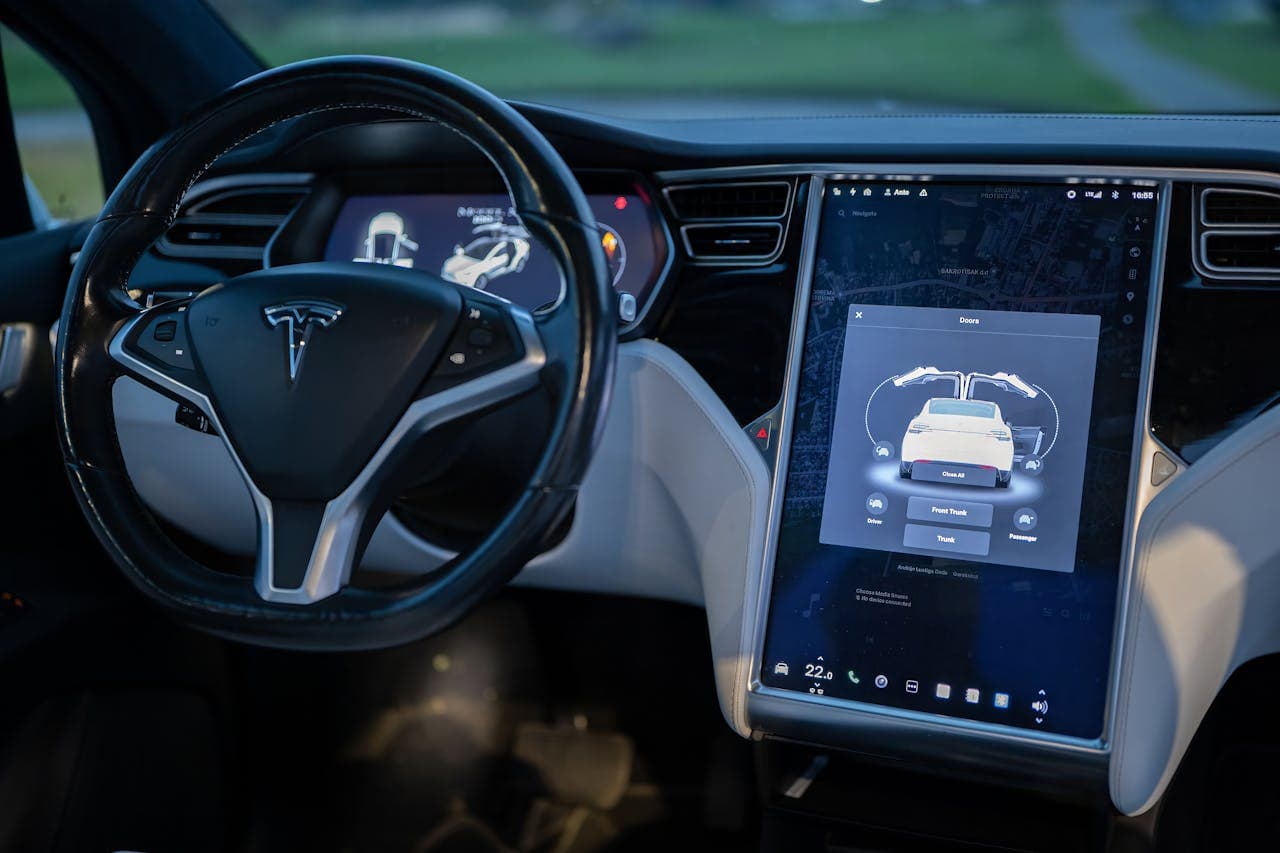
In a landmark decision that could reshape automotive design globally, China has become the first nation to ban hidden electric door handles on vehicles—a sleek design feature popularized by Tesla but now facing intense scrutiny over life-threatening safety concerns. The new regulations, announced by China's Ministry of Industry and Information Technology on February 3, 2026, will take effect January 1, 2027, requiring all car doors to include mechanical release functions accessible from both inside and outside the vehicle.
This unprecedented move follows a series of fatal accidents in which passengers became trapped inside electric vehicles when electronic door systems failed, often with catastrophic consequences. For Tesla owners, prospective EV buyers, and the automotive industry at large, this regulatory shift marks a critical inflection point in the ongoing debate over prioritizing aesthetic innovation versus fundamental safety.
Understanding Hidden Electric Door Handles: Design vs. Safety
Hidden or flush electric door handles have become synonymous with premium electric vehicles over the past decade. Tesla pioneered this minimalist design approach, which features handles that sit flush against the vehicle's exterior, requiring users to press down or push inward to release the lever. The design philosophy behind these handles centers on three primary benefits:
Aerodynamic Efficiency: Flush door handles reduce air resistance by eliminating protrusions from the vehicle's body, theoretically improving range and efficiency—critical metrics for electric vehicles where every percentage point of efficiency translates to extended driving range.
Aesthetic Appeal: The smooth, uninterrupted body lines create a futuristic, premium appearance that has become a signature element of Tesla's design language and has been widely copied by competitors seeking to project similar technological sophistication.
Technological Innovation: Electronically actuated handles that extend when approached or pressed represent cutting-edge engineering, signaling to consumers that they're purchasing advanced, forward-thinking transportation technology.
However, these electric door handles can malfunction in crashes or during battery failures, creating potentially deadly situations where occupants cannot escape burning vehicles or rescuers cannot reach trapped passengers.
The Fatal Incidents That Prompted China's Regulatory Action
China's decision to ban hidden electric door handles didn't emerge in a vacuum—it resulted from mounting evidence of real-world tragedies where electronic door systems failed with fatal consequences.
The Xiaomi SU7 Fatal Crash
Last year, a fatal crash involving a Xiaomi vehicle brought renewed attention to the problem when the driver was trapped by inoperable doors. This high-profile incident involving one of China's most prominent technology companies entering the automotive space catalyzed public outcry and regulatory scrutiny. The Xiaomi SU7, which features Tesla-style flush door handles, became emblematic of the broader industry trend prioritizing design over safety.
The Piedmont Cybertruck Tragedy
In the United States, one of the most heartbreaking incidents occurred in November 2024 in Piedmont, California, where three college students died in a Tesla Cybertruck after the vehicle crashed and caught fire, with only one passenger managing to escape. The investigation revealed the driver was intoxicated and traveling at approximately 81 miles per hour before impact. Autopsy reports showed that the victims died from smoke inhalation and thermal injuries, raising haunting questions about whether they could have survived had the doors been easier to open in the chaotic, terrifying moments following the crash.
Krysta Tsukahara, a college student home for Thanksgiving, was among those who perished. Her parents, Carl and Noelle, filed a wrongful death lawsuit seeking answers to questions that haunt them: Why did the truck catch fire so quickly? Why couldn't their daughter escape?
The Wisconsin Model S Fire
In another crash occurring the same month, a Model S in Wisconsin hit a tree and caught fire, with five occupants unable to escape. A Dane County Sheriff's Office detective noted in a 65-page report that "four of the five bodies were found in the front seat of the vehicle," suggesting they were desperately trying to get out when they succumbed to the fire.
Alijah Arenas' Near-Death Experience
In April 2025, Alijah Arenas, son of former NBA All-Star Gilbert Arenas, survived a harrowing Cybertruck crash in Los Angeles. "I try to open the door, and the door's not opening," Arenas recounted in a June press conference. He was forced to kick through one of the pickup's windows and was pulled out by bystanders. He was later placed in a medically induced coma due to extreme smoke inhalation but fortunately recovered after several days.
These incidents represent just a fraction of documented cases where Tesla's electronic door systems have endangered lives.
Bloomberg Investigation: 140+ Incidents and At Least 15 Deaths
The full scope of the door handle safety crisis became clear through Bloomberg's comprehensive investigative reporting. An investigation by Bloomberg found 140 incidents of people being trapped in their Teslas due to problems with door handles, including several that resulted in horrific injuries.
In a more recent December 2025 analysis, Bloomberg examined every fatal car crash in the United States between 2012 and 2023 that involved a fire, independently identifying additional crashes in 2024 and 2025. The investigation involved reviewing thousands of pages of police, fire, and autopsy reports, photographs, 911 call recordings, and police body-camera footage.
The findings were sobering: At least 15 people have died in a dozen separate incidents over the past decade in which occupants or emergency responders were unable to open Tesla doors after the vehicles crashed and caught fire. While Tesla is not the only manufacturer using electric door handles—approximately 70 models currently sold in the United States feature them—Tesla accounts for the largest number of consumer complaints and documented incidents.
China's New Safety Requirements: What the Regulations Mandate
All car doors must include a mechanical release function for handles, except for the tailgate, according to details released by China's Ministry of Industry and Information Technology. The regulations establish clear, enforceable standards:
External Mechanical Door Handles Required: Every door must have a handle that can be operated mechanically from outside the vehicle without requiring electrical power. This means the Tesla-style fully flush handles that require electronic actuation are explicitly prohibited.
Internal Mechanical Release Mandatory: Interior door panels must include clearly labeled mechanical releases that function even when the vehicle has lost all electrical power, including scenarios where the 12-volt battery has died or been damaged in a crash.
Clear Positioning Standards: Door handles must be located in conventional, expected positions on doors—addressing concerns about unconventional placements like those on the Tesla Cybertruck's exterior.
Visible Labeling Requirements: Mechanical releases must be clearly marked and labeled, eliminating the confusion that has plagued early Model 3 owners who were unaware of manual release locations.
Effective Date: January 1, 2027, giving manufacturers approximately 11 months to redesign affected vehicles.
The regulations underwent extensive development. The Chinese government began the process in May 2025 with more than 40 domestic vehicle manufacturers, parts suppliers, and testing institutions participating in initial research, with over 100 industry experts holding multiple rounds of discussions to determine the standard framework.
The Widespread Industry Impact: Tesla, Xiaomi, Aion, and Beyond
While Tesla pioneered hidden electric door handles and receives the most attention, the Financial Times reports that "almost all" of China's top EV makers sell models with retractable handles. Major Chinese manufacturers affected by the new regulations include:
Xiaomi: The technology giant's first electric vehicle, the SU7 sedan, features flush door handles similar to Tesla's design. Following the fatal crash involving one of its vehicles, Xiaomi faces both regulatory pressure and reputational damage.
Aion (GAC Group): Several models in Aion's lineup incorporate retractable electronic handles as premium features signaling technological advancement.
NIO, XPeng, Li Auto: These emerging Chinese EV leaders have adopted variations of flush handle designs across multiple vehicle lines.
BYD: While some BYD models use more traditional handles, certain premium offerings have incorporated electronic door systems.
The regulation's impact extends far beyond China's borders. Consumer Reports notes that Audi, BMW, Chevrolet, Fiat, Ford, Genesis, Lexus, Lincoln, Maserati, and Volvo all have some form of electronic door handles in some of their models. Each of these manufacturers will need to evaluate whether their Chinese market vehicles require redesign or if they'll proactively adopt mechanical release standards globally.
Global Implications: Will Other Countries Follow China's Lead?
Chris Liu, a Shanghai-based senior analyst at technology research and advisory group Omdia, said the global impact of China's new rules could be substantial and other jurisdictions may follow suit on retractable door handles. Several factors suggest this regulation could catalyze international change:
Europe's Likely Alignment
"China is the first major automotive market to explicitly ban electrical pop-out and press-to-release hidden door handles," Liu noted. "While other regions have flagged safety concerns, China is the first to formalize this into a national safety standard. It's likely that regulators in Europe and elsewhere will reference or align with China's approach".
European automotive safety standards have historically been stringent, and the European Union has shown willingness to adopt or even exceed Chinese safety regulations when compelling evidence demonstrates consumer protection benefits. With multiple European luxury brands selling vehicles in China, harmonizing global standards would reduce manufacturing complexity and costs.
United States Regulatory Momentum Building
The U.S. National Highway Traffic Safety Administration has opened multiple investigations into Tesla door handle systems, signaling growing federal concern:
2021 Model Y Investigation: In September 2025, NHTSA opened a preliminary evaluation covering approximately 174,290 Model Y vehicles from 2021 after receiving nine reports of inoperable door handles, with several incidents involving children trapped inside vehicles.
2022 Model 3 Investigation: In December 2025, NHTSA opened another probe into emergency door releases in certain Model 3 vehicles, evaluating claims that mechanical releases are "hidden, unlabeled, and not intuitive to locate during an emergency".
Legislative Action: Legislation was introduced in the House last month that would require automakers to include fail-safe manual releases on car door interiors and a method for rescue workers to enter the vehicle from the exterior.
While NHTSA has influenced recalls of Ford and Fisker vehicles for defects related to electronic door handles and is investigating similar issues with Dodge Journey SUVs, the agency has not yet taken the bold regulatory stance that China has adopted.
The Challenge for U.S. Regulators
China and the U.S. are both massive auto markets, but they operate largely in separate spheres. Most vehicles sold in China are manufactured in China, while the U.S. maintains heavy tariffs on Chinese-made vehicles and prohibits cars with certain types of Chinese technology, effectively blocking nearly all Chinese vehicles from the American market.
This regulatory independence means U.S. safety standards don't automatically mirror Chinese requirements. However, the political and public pressure following high-profile Tesla door-related deaths could force NHTSA's hand, particularly if Bloomberg's investigation continues documenting fatalities and Congress maintains legislative pressure.
Tesla's Response: Redesigning Door Handles After Years of Concerns
In September 2025, Tesla design chief Franz von Holzhausen revealed on a Bloomberg podcast that the company plans to combine the electric and manual door releases into a single, more intuitive mechanism. This announcement came shortly after NHTSA opened its first door handle investigation and Bloomberg's initial investigative report gained widespread attention.
The Current Tesla Door Handle Problem
Tesla vehicles technically include manual releases inside the cabin, but their implementation has been widely criticized:
Location Inconsistency: Manual releases are in different locations across different Tesla models, creating confusion for passengers who may drive multiple Tesla vehicles or for rescue workers responding to emergencies.
Lack of Clear Labeling: Early Model 3 vehicles had unmarked manual releases, leading to a cottage industry of Tesla fans selling stickers to notify occupants how to open the doors.
Child Accessibility Issues: NHTSA has noted that smaller children may not be able to reach or operate the interior manual releases even if the vehicle's driver is aware of them.
External Access Complexity: Opening Model Y doors manually from outside requires a complicated process involving opening the hood and applying 12 volts DC to two separate points, a procedure NHTSA notes owners are generally unaware exists.
The Proposed Redesign
Von Holzhausen says Tesla is tracking the reports closely and said the redesign is meant to help occupants in "a panic situation". The new design would mirror approaches already adopted by other automakers like Ford's Mustang Mach-E, where the electronic latch doubles as a conventional mechanical handle, with pulling back further on the handle engaging a mechanical release.
However, critical questions remain unanswered:
- Timeline: Tesla has not disclosed when redesigned door handles will be implemented or which models will receive them first.
- Retrofit Plans: No announcement has been made about retrofitting existing vehicles with safer door systems.
- External Access: It's unclear whether the redesign addresses only interior releases or also provides better external emergency access.
- China Compliance: Will Tesla's redesign meet China's new regulatory requirements, or will separate designs be needed for different markets?
Prior Safety Warnings Ignored
Bloomberg separately reported that potential safety issues with electric handles were raised with CEO Elon Musk during the development of Tesla's vehicles. This revelation suggests Tesla had internal awareness of door handle risks but proceeded with the design regardless—a decision that may expose the company to significant legal liability in wrongful death lawsuits.
The Children Trapped in Teslas: A Recurring Nightmare
One of the most disturbing patterns in door handle failures involves parents unable to access their children after the vehicle's electrical system fails. NHTSA's investigation documents reveal a horrifying scenario that has occurred multiple times:
The most commonly reported scenarios involved parents exiting the vehicle after a drive cycle to remove a child from the back seat or placing a child in the back seat before starting a drive cycle. In those events, the parents were unable to reopen a door to regain access to the vehicle.
The 12-Volt Battery Failure Pattern
Electronic door handles become inoperative due to low battery voltage in the vehicle (12VDC low voltage battery), impeding vehicle reentry. The pattern typically unfolds as follows:
- Parent opens rear door to buckle child into car seat
- Parent closes door and walks around vehicle to buckle in second child or load items
- Vehicle's 12-volt battery dies or drops below operational threshold
- Electronic door handles become completely inoperative
- Parent discovers they cannot open any door to reach their child
- Four of these reports involved breaking a window to regain entry into the vehicle
What makes this scenario particularly dangerous is that no warnings prior to the exterior door handle failures—such as a low voltage battery warning—have been reported by owners. The battery failure occurs without any indication to drivers that their vehicle's door system is about to become inoperable.
The Heatstroke Risk
Entrapment in a vehicle is particularly concerning in emergency situations, such as when children are entrapped in a hot vehicle. NHTSA operates a Child Heatstroke Campaign highlighting the dangers of children trapped in hot vehicles, where interior temperatures can rise to lethal levels within minutes, even on relatively mild days.
The combination of electronic door failures and extreme heat creates nightmare scenarios where parents can see their children but cannot reach them, forced to wait for emergency services or attempt to break reinforced automotive glass while their child's life hangs in the balance.
The Broader Context: Tesla's Pattern of Safety Issues
The door handle crisis exists within a broader pattern of safety concerns surrounding Tesla vehicles:
Multiple NHTSA Investigations
Beyond door handles, Tesla faces numerous ongoing federal safety investigations:
- Autopilot/FSD Investigations: Multiple probes into Tesla's driver assistance systems following crashes, including incidents where the systems failed to detect stopped emergency vehicles.
- Phantom Braking: Investigations into sudden, unexpected braking events that have caused rear-end collisions.
- Suspension Failures: Previous investigations into suspension components failing prematurely.
- Battery Fire Risks: Ongoing scrutiny of battery pack safety and fire risks in crash scenarios.
The 2023 Door Unlock Recall
Tesla recalled more than 120,000 Model S and Model X vehicles in 2023 because doors could unlock and swing open during a crash—an issue on the opposite end of the spectrum from doors that won't open, but equally dangerous. This recall demonstrated that Tesla's door systems have suffered from fundamental design and engineering problems across multiple failure modes.
California Court Ruling on Deceptive Marketing
In December 2025, a California judge ruled that Tesla engaged in deceptive marketing by overstating the capabilities of Full Self-Driving (Supervised) and Autopilot. This finding of deliberate consumer deception raises questions about whether Tesla similarly misrepresented the safety and reliability of its door systems to buyers.
What Tesla Owners Should Do Right Now
If you currently own a Tesla or are considering purchasing one, here are critical steps to take:
Learn Your Vehicle's Manual Release Locations
Immediate Action: Locate the mechanical door releases in your specific Tesla model. The locations vary:
- Model 3/Y: Front doors have pull-up mechanical releases hidden near the window switches. Rear doors have releases under floor mats or behind speaker grilles (varies by year).
- Model S/X: Front doors have dual-action handles. Rear doors may require removing panels.
- Cybertruck: Check your owner's manual for specific locations as the design differs significantly.
Practice Opening: With the vehicle parked safely, practice using the mechanical releases so the motion becomes automatic. Teach all family members, including older children, how to operate them.
Add Visual Labels: Consider purchasing aftermarket labels or stickers that clearly mark manual release locations, particularly if you have children or frequently have passengers unfamiliar with Tesla vehicles.
Monitor Your 12-Volt Battery Health
Tesla reportedly changed the 12-volt battery in the cars involved in those reports of door handle failures. Watch for:
- Slow or laggy touchscreen response
- Delayed door handle extension
- Warning messages about electrical system issues
- Difficulty starting the vehicle
Schedule service immediately if you experience any of these symptoms. Don't wait for a formal low-voltage warning—by the time it appears, you may already be experiencing door lock issues.
File NHTSA Complaints
If you experience door handle malfunctions, file a detailed complaint with NHTSA at safercar.gov. Your report contributes to the statistical evidence that can trigger broader investigations and recalls. Include:
- Exact date, time, and location of incident
- Specific circumstances (weather, battery status, whether vehicle was recently driven)
- Which doors were affected
- Any warning messages displayed
- Steps taken to resolve the situation
- Whether children or vulnerable passengers were involved
Consider Emergency Preparedness Tools
Keep the following in your Tesla:
- Window Breaking Tool: A spring-loaded window punch stored in an accessible location (not in the trunk or glove compartment).
- Fire Extinguisher: A small ABC-rated fire extinguisher rated for electrical fires.
- External Battery Pack: A portable jump starter capable of providing 12V power to potentially restore door function in an emergency.
Review Your Insurance Coverage
Given the documented risks, consider:
- Reviewing your liability coverage limits in case passengers are injured due to door malfunctions
- Documenting that you've educated passengers about manual releases to demonstrate reasonable precautions
- Consulting with insurance professionals about whether Tesla-specific riders or adjustments are advisable
The Economic Impact: Costly Redesigns Ahead for Automakers
Carmakers will be facing potentially costly redesigns or retrofits as a result of China's ban. The economic implications extend across the industry:
Design and Engineering Costs
Redesigning door handle systems requires:
- CAD and Engineering Labor: Hundreds of hours of design work to create handle systems that meet mechanical requirements while maintaining aesthetic appeal.
- Crash Testing: Extensive testing to ensure new handles meet safety standards in various collision scenarios.
- Durability Testing: Cycling tests simulating years of use in different climates and conditions.
- Regulatory Certification: Documentation and approval processes in each market where vehicles will be sold.
Manufacturing Retooling
Production facilities must be reconfigured:
- Stamping Dies: New body panels with different handle cutouts require new stamping dies costing hundreds of thousands of dollars each.
- Assembly Line Modifications: Installation processes for mechanical handles differ from electronic systems, necessitating changes to assembly line workflows and tooling.
- Supply Chain Adjustments: Establishing relationships with suppliers of mechanical handle components or bringing production in-house.
Impact on Premium EV Positioning
The new requirements would impact premium EVs more as retractable door handles "are treated as a design and aerodynamic statement", according to analyst Chris Liu. Luxury electric vehicle manufacturers have used flush handles as visual differentiators signaling technological sophistication and premium positioning.
Returning to conventional protruding handles represents a step backward in the design language these brands have cultivated, potentially affecting brand perception and commanding power in premium market segments. Some manufacturers may attempt to develop sophisticated mechanical handles that maintain visual sleekness while meeting safety requirements—but such solutions will be significantly more expensive than simple electronic actuators.
The China Market's Importance
For context, China is the world's largest automotive market, with over 25 million vehicles sold annually—representing approximately 30% of global vehicle sales. For electric vehicles specifically, China accounts for approximately 60% of worldwide EV sales. No major automaker can afford to exit or significantly scale back Chinese operations.
This market dominance gives Chinese regulators enormous leverage. When China mandates safety features, global automakers must comply or forfeit access to their largest and most profitable market. The ripple effects of Chinese automotive regulations increasingly shape global design standards.
The Deeper Question: Style vs. Safety in Automotive Design
The hidden door handle controversy reflects a broader tension in modern automotive design: At what point does aesthetic innovation and technological showmanship compromise fundamental safety?
The Minimalist Design Philosophy
Tesla's design approach, heavily influenced by Apple's minimalist product philosophy, prioritizes:
- Visual Simplicity: Removing visual clutter and creating clean, uninterrupted surfaces
- Technological Differentiation: Using design elements that signal advanced technology and innovation
- Brand Identity: Creating distinctive, instantly recognizable design signatures
This philosophy has been phenomenally successful from a marketing perspective. Tesla vehicles are unmistakably distinctive, and the flush door handles have become iconic elements of the brand's visual identity. Competitors across the industry have copied Tesla's design approach, validating its market appeal.
The Safety Engineering Perspective
However, safety engineers approach design from fundamentally different priorities:
- Reliability Under Duress: Systems must function when needed most—in crashes, fires, power failures, and other emergency scenarios
- Intuitive Operation: In crisis situations, occupants don't have time to remember procedures or locations of hidden releases. Door opening must be instinctive
- Redundancy: Critical safety systems should have multiple backup mechanisms that don't rely on the same power sources or control systems
- Universal Accessibility: All users—children, elderly, disabled, or unfamiliar passengers—must be able to operate safety systems without training or exceptional strength
When Silicon Valley Disruption Meets Life-Safety Engineering
Tesla's approach to automotive design has borrowed heavily from Silicon Valley's "move fast and break things" ethos—prioritizing rapid innovation and market disruption over incremental, cautious development. This philosophy has accelerated EV adoption and forced legacy automakers to modernize more quickly than they would have otherwise.
However, automotive safety engineering traditionally operates under fundamentally different principles. Unlike software that can be patched and updated, physical safety systems in vehicles must work reliably for 10-15 years under extreme conditions without failure. The consequences of mistakes aren't corrupted data files—they're human lives.
The hidden door handle crisis suggests that certain Silicon Valley approaches may be incompatible with life-safety-critical automotive systems. While rapid iteration works for user interfaces and software features, fundamental safety mechanisms like door opening systems require the cautious, conservative engineering approach that traditional automakers developed over a century of hard lessons.
Looking Forward: What Comes Next for EV Door Design
China's regulation represents a watershed moment that will reshape automotive door design for the next decade. Here's what we can expect:
Short-Term (2026-2027)
- Emergency Redesigns: Manufacturers will rush to develop mechanical door handle systems for Chinese market vehicles, with crash programs running in parallel at multiple automakers
- Regulatory Clarification: Additional details and enforcement guidance from China's Ministry of Industry and Information Technology as implementation approaches
- U.S. Legislative Activity: Increased congressional pressure on NHTSA to adopt similar standards following China's lead
- NHTSA Investigation Conclusions: Potential recalls or mandated retrofits if federal investigations determine existing Tesla door systems are defective
Medium-Term (2027-2029)
- Global Standards Harmonization: European and other markets likely adopt similar mechanical release requirements, leading to unified global door handle standards
- Next-Generation Mechanical Designs: Engineers develop sophisticated mechanical handle systems that maintain sleek aesthetics while meeting safety requirements—potentially including mechanical handles that sit nearly flush until pulled
- Retrofitting Older Vehicles: Potential programs to retrofit existing EVs with safer door systems, particularly if litigation pressure or recall orders force manufacturers' hands
- Insurance Premium Adjustments: Insurers may begin charging different premiums for vehicles with documented door safety issues
Long-Term (2030+)
- Industry-Wide Best Practices: Mechanical door releases with clear labeling become standard across all vehicle segments and manufacturers
- Improved Emergency Systems: Integration of door systems with crash detection to automatically unlock or partially open doors when airbags deploy
- Regulatory Framework Maturity: Comprehensive international standards for emergency egress from all vehicles, possibly extending beyond doors to windows and other escape routes
- Material Innovation: Development of "breakaway" glass or other emergency escape technologies that complement improved door systems
The Broader Implications for Automotive Safety Regulation
China's hidden door handle ban demonstrates several important principles:
Proactive vs. Reactive Regulation
It's unfortunate that we had to get there the way we did, after high-profile deaths were contributed to by these designs. But it's common for regulations to be written in blood, as one industry analyst noted. Historically, automotive safety regulations have emerged after tragedies—seatbelt requirements followed decades of unnecessary deaths; airbag mandates came after extensive research on collision injuries.
China's relatively rapid regulatory response to emerging door handle safety concerns represents a more proactive approach than typically seen in automotive regulation. While several deaths did occur before action was taken, the timeline from first incidents to regulatory prohibition was measured in months rather than the decades often required for safety regulations to emerge.
Global Regulatory Influence Shifting
For decades, automotive safety standards were primarily set by U.S. (NHTSA) and European (ECE) regulators, with other markets generally adopting these standards. China's hidden door handle ban represents a shift: China is the first major automotive market to explicitly ban electrical pop-out and press-to-release hidden door handles, with other regulators expected to follow.
This reflects China's growing influence in global automotive markets. As the largest vehicle market and dominant EV market, Chinese regulatory decisions increasingly drive global standards rather than merely adapting Western requirements.
The Limits of Self-Regulation
The automotive industry has long argued that self-regulation and market forces adequately address safety concerns without heavy-handed government mandates. The door handle crisis suggests otherwise—multiple manufacturers adopted problematic designs, and despite documented deaths and injuries, voluntary industry changes have been minimal.
Tesla announced plans to redesign door handles only after NHTSA investigations began and Bloomberg's reporting generated negative publicity. Without regulatory pressure, it's unclear whether any manufacturer would have voluntarily abandoned flush electric handles despite mounting evidence of their dangers.
Conclusion: A Safety Revolution Disguised as a Design Regulation
China's ban on hidden electric door handles may appear to be a narrow regulatory adjustment targeting a specific design feature. In reality, it represents something far more significant: a fundamental reassessment of the balance between aesthetic innovation and functional safety in modern automotive design.
The benefits of these handle designs are so marginal that it really doesn't feel like an issue, at all, to give it up. The aerodynamic advantages of flush handles amount to perhaps 1-2% range improvement—meaningful but hardly revolutionary. The aesthetic appeal, while real, cannot be worth even a single preventable death.
For Tesla owners and enthusiasts, this regulation requires confronting an uncomfortable truth: a company celebrated for innovation and technological advancement pioneered and persisted with a design feature that has contributed to multiple deaths. The manual releases exist but are poorly labeled, inconsistently located, and—critically—rely on occupants remaining calm and knowledgeable in the most terrifying moments of their lives.
For the broader automotive industry, China's regulation should serve as a wake-up call. The rush to copy Tesla's design language without critically examining the safety implications of each element has led multiple manufacturers down the same dangerous path. Premium positioning and technological signaling cannot justify compromising emergency egress capability.
As we look toward a future dominated by electric vehicles and increasingly automated transportation, the hidden door handle crisis offers a crucial lesson: technological innovation must be tempered by engineering conservatism when human lives hang in the balance. Sometimes, the old way—a mechanical handle that always works—is better than the new way, no matter how futuristic the new way appears.
China has taken the first step toward correcting this industry-wide safety failure. Now the question becomes whether other regulators will follow—and whether manufacturers will proactively extend these safety improvements globally, or wait to be forced by regulations written in blood, one market at a time.
Recent from the Blog
Tesla Rolls Out FSD v14.2.2.4: What You Need to Know
Tesla continues to refine its Full Self-Driving (Supervised) software with the latest point release, FSD v14.2.2.4 (firmware version 2025.45.9). The update is currently expanding to users across the United States and Canada, marking another step forward in Tesla's autonomous driving capabilities.
Best Companies Offering Insurance Quotes Specifically for Electric Cars Like Tesla in 2026
Comprehensive guide to Tesla insurance costs and the best insurance companies for electric vehicles. Compare rates, understand how much is insurance for Tesla, and get accurate Tesla Model insurance quotes from top providers.

Tesla CEO Elon Musk Drops Massive Update About Cybercab: April 2026 Production Confirmed
Tesla CEO Elon Musk confirms Cybercab production begins April 2026 at Gigafactory Texas. Revolutionary 10-second cycle time, under $30,000 price point, and 2-3 million annual production target reshape autonomous vehicle landscape.