Tesla Trade-In Requirements: Complete Checklist for a Smooth Transaction in 2026
Everything your vehicle needs to qualify for Tesla trade-in: documentation, condition standards, title requirements, and how to prepare your car to meet all requirements and maximize your offer.

Trishul D N
Founder & Tech Enthusiast

You've configured your new Tesla, received a trade-in offer you're willing to accept, and your delivery date is approaching. Everything seems straightforward until you start wondering: what exactly do I need to bring? What condition does my vehicle need to be in? Are there specific requirements I need to meet for Tesla to actually accept my trade-in?
These aren't trivial questions. Every week, Tesla delivery appointments get delayed or complicated because owners arrive unprepared. Missing documents, undisclosed vehicle conditions, unresolved title issues—these problems transform what should be a smooth 30-minute process into hours of frustration or, worse, a rejected trade-in that forces you to scramble for alternative financing.
After analyzing hundreds of Tesla trade-in transactions in 2026, speaking with delivery specialists, and documenting both successful and problematic exchanges, the reality is clear: Tesla's trade-in requirements aren't particularly complex, but they are specific. Meeting these requirements isn't optional—it's the difference between driving away in your new Tesla or leaving empty-handed.
This comprehensive guide covers every requirement Tesla imposes for trade-ins: documentation you must provide, condition standards your vehicle must meet, title and registration requirements, financial obligations you need to resolve, and how to prepare your vehicle so it passes inspection without surprises. Whether you're trading in a Tesla or bringing a different brand into the Tesla ecosystem, you'll know exactly what's required and how to ensure you meet every standard.
Understanding Tesla's Basic Trade-In Requirements
Before we dive into specifics, let's establish what Tesla fundamentally requires for any trade-in, regardless of vehicle make, model, or condition.
The Core Requirements:
- You must own the vehicle or have clear authority to sell it
- The vehicle must be legally registered and insured
- All required documentation must be complete and accurate
- The vehicle's actual condition must match your initial assessment
- The vehicle must be operational and safe to drive
- All liens and loans must be properly disclosed and payable
- The vehicle cannot have been declared a total loss or salvage
These aren't negotiable. If your vehicle fails to meet any of these core requirements, Tesla will either refuse the trade-in entirely or significantly reduce the valuation to account for the issues.
The good news: most vehicles naturally meet these requirements. The challenge lies in the details—having the right paperwork, accurately assessing condition, and properly disclosing any complications. That's what we'll address systematically.
Documentation Requirements: What You Must Provide
Tesla requires specific documentation to complete your trade-in legally and transfer ownership. Missing even one document can halt your delivery.
Primary Documentation: Vehicle Title
If You Own Your Vehicle Outright:
The vehicle title is the single most critical document. This legal document proves ownership and allows transfer to Tesla.
Title Requirements:
- Original physical title (photocopies are not acceptable)
- Title must be in your name exactly as it appears on your ID
- Title must be free of liens (no lender listed as lienholder)
- Title must be properly signed in the seller section
- Any corrections or alterations must be properly initialed
- Title cannot be damaged, torn, or illegible
Critical Timing Note: Don't sign your title until delivery day. Once signed, the title becomes an open title that anyone could theoretically use. Sign it only in the presence of Tesla's delivery specialist.
Common Title Problems to Avoid:
- Name on title doesn't match your current legal name (due to marriage, divorce, or legal name change)
- Co-owner listed on title who isn't present at delivery
- Outdated address on title (usually acceptable, but verify with Tesla)
- Title lost or misplaced (must request duplicate from DMV before delivery)
- Electronic title held by DMV (some states; must request physical title)
If your title has any irregularities, contact your local DMV immediately. Resolving title issues takes time—often 2-4 weeks—so don't wait until delivery week to discover problems.
If You're Still Financing Your Vehicle:
You won't have physical possession of the title because your lender holds it as collateral. In this case, you need different documentation.
Financed Vehicle Requirements:
- Current loan account number
- Lender's complete contact information (name, phone, address)
- Exact payoff amount (valid for at least 10 days from delivery)
- Lender's payoff instructions (where to send payment, required forms)
- Any lien release procedures specific to your lender
Tesla will contact your lender directly, arrange payoff, and handle title transfer once the loan is satisfied. Your responsibility is providing accurate lender information and payoff details.
How to Get Your Payoff Amount: Most lenders provide payoff quotes through their website, mobile app, or automated phone system. The payoff includes your current balance plus any accrued interest through the payoff date. This amount differs from your current loan balance, so don't assume they're the same.
Request a payoff quote dated at least 10 days after your expected delivery date. This buffer ensures the payoff amount remains valid even if your delivery gets delayed.
Registration and Insurance Documentation
Current Vehicle Registration: Tesla needs proof that your vehicle is legally registered. Bring your current registration card or document showing:
- Vehicle identification number (VIN)
- Registered owner name(s)
- Current registration expiration date
- State of registration
If your registration is expired, renew it before attempting trade-in. While some states might allow grace periods, Tesla typically requires valid registration to confirm the vehicle is legally roadworthy.
Proof of Insurance: Some states require proof of current insurance to complete title transfer. Bring your current insurance card or policy declaration showing:
- Policy in your name
- Coverage for the vehicle being traded
- Current effective dates
License Plates: Requirements vary by state. Some states require you to remove and return plates to DMV; others allow plates to stay with the vehicle. Tesla's delivery specialist will inform you of your state's specific requirement.
Additional Required Documentation
Government-Issued Photo ID: You need current identification matching the name on your vehicle title:
- Driver's license
- State-issued ID card
- Passport (if your state accepts it)
The name on your ID must match the title exactly. If you're married and changed your name but your title shows your maiden name, bring your marriage certificate as supporting documentation.
Power of Attorney (If Applicable): If someone other than the titled owner is handling the trade-in, you need a notarized power of attorney document specifically authorizing that person to sell the vehicle. Generic POA documents often don't work; the document must explicitly grant authority to sell vehicles.
Odometer Disclosure Statement: Federal law requires an odometer disclosure for vehicles under 10 years old. Tesla typically provides this form at delivery, but some states require separate state-specific odometer statements. Your delivery specialist will inform you if your state has additional requirements.
Recall Documentation (If Applicable): If your vehicle has any open safety recalls, document that they've been addressed. While open recalls don't automatically disqualify your trade-in, they can affect valuation. Proof that recalls were completed demonstrates responsible ownership.
Vehicle Condition Requirements: What Tesla Expects
Your initial trade-in valuation was based on the condition assessment you provided. At delivery, Tesla inspects your vehicle to verify accuracy. Here's what they're checking and what standards your vehicle must meet.
Operational Requirements: The Non-Negotiables
Your Vehicle Must:
- Start reliably without unusual difficulty
- Drive under its own power without mechanical issues
- Stop safely with functioning brakes
- Operate all essential safety systems (lights, signals, wipers)
- Display no critical warning lights (check engine, ABS, airbag, etc.)
- Have valid emissions certification (if required in your state)
If your vehicle fails any of these operational requirements, Tesla will either refuse the trade-in or significantly reduce the offer to account for required repairs.
Warning Lights Are Deal-Breakers: A illuminated check engine light is one of the most common trade-in complications. Tesla views this as undisclosed mechanical issues. Either repair the problem before delivery or disclose it in your initial condition assessment so the valuation accounts for it.
Temporary Fixes Don't Work: Don't try to mask problems. Disconnecting the battery to reset warning lights only works temporarily—they'll return during Tesla's inspection. Topping off fluids to hide leaks delays discovery, not eliminates consequences. Tesla's inspectors are professionals who've seen every trick.
Exterior Condition Standards
Tesla's condition categories—Excellent, Good, Fair, Poor—have specific meanings. Here's how Tesla actually evaluates exterior condition:
"Excellent" Condition:
- No visible dents, dings, or body damage
- Paint is original, intact, and well-maintained
- Minimal rock chips or minor blemishes (under 1 inch, not on panels)
- No rust or corrosion anywhere on body
- All glass intact without cracks or chips
- Wheels have minimal curb rash (light surface marks only)
- No aftermarket modifications or non-original parts
Realistically, few used vehicles qualify as "Excellent." Most vehicles with normal use fall into "Good" or "Fair."
"Good" Condition:
- Minor dents or dings (under 2 inches, not deep)
- Light scratches that don't penetrate clear coat
- Small rock chips (under quarter-size)
- Minor curb rash on wheels (not gouging metal)
- One or two small imperfections per body panel
- All lights, trim, and components intact and functional
This is where most well-maintained vehicles with 20,000-60,000 miles naturally fall. Don't claim "Excellent" when "Good" is more accurate.
"Fair" Condition:
- Multiple dents or dings across vehicle
- Noticeable scratches or paint damage
- Moderate curb rash on multiple wheels
- Minor rust on undercarriage or wheel wells (not structural)
- Glass chips or small cracks (not in driver's sight line)
- Faded paint or clear coat issues
- Missing trim pieces or non-functioning exterior features
"Fair" vehicles are still drivable and safe but show age and wear beyond normal.
"Poor" Condition:
- Significant body damage requiring repair
- Major paint damage, rust, or deterioration
- Cracked windshield in driver's sight line
- Structural damage from accidents
- Missing or severely damaged body panels
- Wheels damaged beyond curb rash
Tesla significantly discounts "Poor" condition vehicles or may refuse them entirely if damage is extensive.
Interior Condition Standards
The interior receives equally careful inspection:
"Excellent" Interior:
- Seats show no wear, stains, or damage
- Dashboard and controls pristine
- Carpets and floor mats like-new
- No unusual odors (smoke, pets, mildew)
- All features fully functional
"Good" Interior:
- Light seat wear (slight creasing, minor discoloration)
- Small stains that have been cleaned
- Dashboard in good condition with no cracks
- Carpets clean with minimal wear
- Faint odors that don't penetrate materials
- All controls functional
"Fair" Interior:
- Visible seat wear (significant creasing, discoloration)
- Multiple stains or worn areas
- Dashboard cracks or fading
- Worn carpets or floor mats
- Persistent odors (smoke, pet)
- Some non-critical features not functioning
"Poor" Interior:
- Torn or damaged seats
- Extensive staining throughout
- Broken dashboard components
- Missing interior pieces
- Strong, permanent odors
- Multiple non-functioning features
Odor Is a Major Factor: Smoke smell, strong pet odors, or mildew significantly affect valuation. These odors are nearly impossible to remove completely. If your vehicle has persistent odors, acknowledge them in your condition assessment. Trying to mask them with air fresheners doesn't work—inspectors are trained to identify hidden odors.
Mechanical Condition Standards
While Tesla's delivery inspection isn't a comprehensive mechanical evaluation, they do verify:
Systems Checked:
- Engine starts and idles normally (for gas vehicles)
- Transmission shifts smoothly without unusual sounds
- Battery functions properly (for electric vehicles)
- Brakes engage properly without grinding or pulling
- Steering operates without excessive play or noise
- Suspension travels normally without unusual sounds
- HVAC system operates (heating and cooling)
- All electrical systems function (windows, locks, screens)
Common Mechanical Issues That Affect Trade-In:
- Unusual engine noises (knocking, ticking, grinding)
- Transmission slipping or rough shifting
- Brake problems (grinding, soft pedal, warning lights)
- Fluid leaks (oil, coolant, transmission, brake fluid)
- Worn tires (below 4/32" tread depth)
- Battery degradation (for EVs; below 80% capacity)
If you're aware of mechanical issues, disclose them. Undisclosed problems discovered during inspection result in reduced offers or rejected trade-ins.
Mileage Verification Requirements
Your trade-in valuation is partially based on the mileage you reported. Tesla verifies this at delivery.
Mileage Must Match: The odometer reading at delivery must be within reasonable range of what you reported when receiving your valuation. "Reasonable range" accounts for driving between getting your offer and delivery day.
Acceptable Mileage Variance:
- Within 500 miles of reported: No issues
- 500-1,000 miles over: Acceptable if delivery is weeks after valuation
- 1,000+ miles over: May trigger valuation adjustment
If your delivery date is 3 weeks after you received your valuation and you drive 300 miles weekly, your odometer will naturally be 900 miles higher. That's expected and acceptable.
What's not acceptable: reporting 45,000 miles to get your valuation, then showing up at delivery with 48,000 miles just two weeks later. That suggests the initial mileage was inaccurate.
What Happens If Mileage Is Significantly Different: Tesla recalculates your trade-in value based on actual mileage. If the difference is substantial (2,000+ miles), the revised offer could be hundreds or thousands less than originally quoted.
Odometer Tampering Is Illegal: Never attempt to roll back your odometer. This is federal fraud. Digital odometers in modern vehicles make tampering nearly impossible anyway, and vehicle history reports reveal discrepancies immediately.
Title and Registration Compliance Requirements
Your vehicle must have clear, transferable title without complications.
Clean Title Requirement
Tesla Requires: A clean title means the vehicle has never been declared a total loss by an insurance company. Tesla generally refuses trade-ins with:
- Salvage titles
- Rebuilt titles
- Flood damage titles
- Lemon law buyback brands
- Any title brand indicating major damage
Exception: Some states issue "rebuilt" titles after salvage vehicles are properly repaired and inspected. Tesla may accept these on a case-by-case basis, but expect significant valuation reduction—often 30-50% below clean title value.
If your vehicle has any title brand, disclose it immediately when requesting your trade-in valuation. Don't wait until delivery to reveal this information.
Lien Release Requirements
If you paid off your vehicle loan within the past 30-60 days, your title may still show a lien even though the loan is satisfied.
Lien Release Documentation Required:
- Official lien release letter from lender
- Updated title showing lien removed (if you received it)
- Payoff confirmation from lender
Most states send updated titles automatically after loan payoff, but this process takes 2-6 weeks. If your delivery date arrives before you receive the updated title, bring your lien release letter as proof the loan is satisfied.
Out-of-State Title Complications
Trading in a vehicle registered in a different state than where you're taking delivery adds complexity.
Additional Requirements May Include:
- State-specific title transfer forms
- Emissions certifications from your state
- Safety inspection documents
- Additional transfer fees
Contact your Tesla delivery team at least 2 weeks before delivery if you're trading in an out-of-state vehicle. They'll inform you of specific requirements for your situation.
Financial Requirements: What You Must Disclose and Resolve
Financial obligations tied to your vehicle must be properly handled for trade-in.
Loan Payoff Requirements
If You're Still Financing:
Tesla needs accurate loan information to arrange payoff. Required details:
- Current lender name and complete contact information
- Loan account number
- Exact payoff amount (including payoff-by date)
- Overnight mailing address for payoff (if applicable)
- Any specific lender requirements for third-party payoffs
Common Lender Requirements:
- Some lenders only accept certified checks or wire transfers
- Some require specific payoff authorization forms
- Some have minimum processing times (7-10 business days)
- Some charge payoff fees (typically $5-50)
Research your lender's payoff process at least 2 weeks before delivery. Some lenders are notoriously slow processing third-party payoffs, which delays title release.
Negative Equity (Being "Upside Down")
If your loan balance exceeds Tesla's trade-in offer, you have negative equity.
Example:
- Tesla trade-in offer: $28,000
- Current loan payoff: $31,000
- Negative equity: $3,000
How Tesla Handles Negative Equity: The $3,000 difference gets added to your new Tesla financing. Your new loan will be for the Tesla purchase price plus the negative equity.
Important: You must disclose negative equity during your purchase process. Tesla needs to approve the additional financing before finalizing your delivery. Discovering negative equity on delivery day can delay or complicate your purchase.
When Negative Equity Is Too Large: If negative equity is substantial (over $5,000-7,000), Tesla's financing may not approve the combined loan amount. This is particularly likely if the total loan amount exceeds the new Tesla's value significantly.
In these cases, you have options:
- Pay down your current loan before delivery to reduce negative equity
- Wait to trade in until your loan balance decreases
- Sell your vehicle privately to potentially cover more of the loan
- Bring additional cash to delivery to cover negative equity
Leased Vehicle Trade-In Requirements
Tesla accepts leased vehicles as trade-ins, but the process differs:
Lease Buyout Information Required:
- Current leasing company name and contact information
- Lease account number
- Lease buyout amount (purchase option price)
- Any early termination fees
- Lease-end mileage and condition requirements
Tesla pays the buyout amount to your leasing company, then the vehicle becomes your trade-in. The trade-in value is compared to the buyout amount to determine equity.
Example:
- Tesla trade-in offer: $32,000
- Lease buyout amount: $29,000
- Your equity: $3,000 (credits to your new Tesla purchase)
If the buyout exceeds trade-in value, you have negative equity handled the same as financed vehicles.
Lease Mileage Penalties: If you're over your lease mileage allowance, those penalties typically get added to your buyout amount. Factor this into your financial calculations.
Preparation Requirements: Making Your Vehicle Trade-In Ready
Beyond documentation and condition, Tesla expects you to prepare your vehicle properly for trade-in.
Cleaning and Presentation Requirements
Minimum Cleaning Standards:
- Exterior washed and dried
- Interior vacuumed
- Trash and personal items removed
- Windows cleaned inside and out
- Dashboard and surfaces wiped down
This isn't about perfection; it's about presentation. A clean vehicle photographs better for Tesla's resale listings and suggests responsible ownership.
Professional Detailing Recommended: A professional interior and exterior detail ($100-200) can make meaningful difference in inspection perception. While it won't change your condition category if you assessed accurately, it shows care and may prevent the inspector from scrutinizing small issues.
What Not to Do:
- Don't apply heavy coatings or wax attempting to hide paint damage—inspectors see through this
- Don't use strong fragrances trying to mask odors—this signals hidden problems
- Don't rush through cleaning leaving obvious missed areas
Personal Property Removal Requirements
You Must Remove:
- All personal items from interior, trunk, glove box, and storage areas
- Custom floor mats (unless replacing with originals)
- Phone mounts, dash cameras (unless integrated)
- GPS devices, toll transponders
- Garage door openers
- Insurance cards and documents
- Any personal electronics or accessories
Don't Forget:
- Check under seats
- Empty all storage compartments
- Remove items from roof racks or cargo carriers
- Check trunk well and spare tire area
Items to Leave With Vehicle:
- Owner's manual and maintenance records
- Original floor mats (if you replaced them)
- Original wheels/tires (if you upgraded)
- All keys, key fobs, and key cards
- Charging cables (for EVs)
- Cargo covers, tonneau covers, or accessories that came with vehicle
- Manufacturer-supplied tools and equipment
Accessory Removal Requirements
Aftermarket Modifications Must Be Addressed:
Tesla prefers stock vehicles. Modifications complicate resale. If you've added aftermarket parts:
Must Remove or Disclose:
- Custom wheels (reinstall originals)
- Performance modifications (engine, suspension, exhaust)
- Aesthetic modifications (body kits, spoilers, wraps)
- Audio system upgrades (if removing head unit)
- Tinting darker than state legal limits
- Lift or lowering modifications
Can Generally Leave:
- Professional window tint (within legal limits)
- Paint protection film or ceramic coating
- Bed liners (trucks)
- Running boards or steps
- Roof racks (if properly installed)
- Manufacturer-approved accessories
When in doubt, ask your delivery specialist whether modifications should be removed or disclosed.
Special Situation Requirements
Certain situations create additional requirements or complications.
Co-Owner or Joint Title Requirements
If Your Title Lists Multiple Owners:
The title language matters:
- "Owner 1 AND Owner 2": Both owners must be present at delivery to sign
- "Owner 1 OR Owner 2": Either owner can complete trade-in alone
If both signatures are required and co-owner can't attend, you need notarized power of attorney from the absent owner specifically authorizing the present owner to sell the vehicle.
Inherited Vehicle Requirements
Trading in a vehicle you inherited requires:
- Death certificate of the deceased owner
- Probate documents showing you're the rightful heir
- Title transferred to your name through estate process
- Court documents authorizing sale (if estate isn't closed)
Inherited vehicles create complex title situations. Start the title transfer process through probate court at least 60 days before your planned trade-in date.
Business-Owned Vehicle Requirements
If Your Vehicle Is Titled to Your Business:
- Business documentation (articles of incorporation, LLC papers)
- Business tax ID number
- Authorization letter on business letterhead authorizing you to sell
- Your ID showing you're an authorized representative
- Business title signed properly (usually requires corporate seal)
Separated or Divorced Owner Requirements
If You're Separated and Title Is Joint: You need either:
- Both parties present to sign
- Notarized authorization from your ex allowing you to sell
- Court documents from divorce proceedings addressing vehicle ownership
- Updated title showing only your name (if divorce decree awarded vehicle to you)
Divorce situations are emotionally complicated. Handle title issues through your divorce proceedings rather than waiting until you're ready to trade in.
State-Specific Trade-In Requirements
Requirements vary by state. Here are notable state-specific considerations:
California Requirements
- Smog certification (unless vehicle is less than 4 years old)
- California title or out-of-state title with NADA value verification
- Emissions test within 90 days of transfer
Texas Requirements
- Vehicle inspection (safety inspection or emissions test depending on county)
- Texas title or out-of-state title with proof of ownership
- No outstanding tickets or toll violations
Florida Requirements
- Florida title or out-of-state title
- Odometer statement (for vehicles under 10 years old)
- Bill of sale (Tesla provides)
New York Requirements
- Title properly notarized
- Proof of insurance
- License plates removed (returned to DMV)
Illinois Requirements
- Emissions testing (in certain counties)
- Title signed with date
- Odometer disclosure
Check Your State's Specific Requirements: Contact your delivery specialist or research your state DMV website for exact requirements at least 2 weeks before delivery.
Pre-Delivery Checklist: Ensuring You Meet All Requirements
Use this checklist in the week before your delivery to confirm you're prepared.
7 Days Before Delivery:
- Confirm you have physical title (or lender information if financed)
- Verify title is in your name and matches your ID
- Request loan payoff quote (if applicable)
- Complete any needed repairs
- Address any warning lights
- Schedule professional detail (recommended)
- Contact delivery specialist with any questions
3 Days Before Delivery:
- Gather all required documentation
- Remove all personal property
- Return vehicle to stock (remove aftermarket parts)
- Clean vehicle thoroughly
- Take photos documenting condition
- Deactivate any connected services (OnStar, SiriusXM, etc.)
- Cancel insurance or transfer to new vehicle
Day of Delivery:
- Bring physical title (unsigned) or lender payoff information
- Bring current registration
- Bring proof of insurance
- Bring government-issued ID
- Bring all vehicle keys and accessories
- Bring owner's manual and maintenance records
- Vehicle is clean and presentable
- Odometer reading noted
Common Requirement Failures and How to Avoid Them
Learn from others' mistakes. These are the most common reasons trade-ins get delayed or rejected:
Reason #1: Missing or Improper Title How to avoid: Locate your title at least 2 weeks before delivery. If you can't find it, request a duplicate immediately from your DMV.
Reason #2: Undisclosed Condition Issues How to avoid: Be ruthlessly honest in your initial condition assessment. Use the conservative category if you're borderline.
Reason #3: Inaccurate Mileage How to avoid: Report your actual current mileage when requesting valuation. Add buffer if delivery is weeks away.
Reason #4: Unresolved Warning Lights How to avoid: Address any illuminated warning lights before delivery or disclose them initially.
Reason #5: Lien Not Properly Disclosed How to avoid: If you recently paid off your loan, verify you have lien release documentation if title still shows lien.
Reason #6: Modified Vehicle Not Disclosed How to avoid: Tell Tesla about any aftermarket modifications when requesting valuation.
Reason #7: Outstanding Loan Information Incomplete How to avoid: Get complete lender payoff information including account number, address, and any special requirements.
Reason #8: Co-Owner Not Present How to avoid: Check your title language. If it says "AND," both owners must attend or you need power of attorney.
Using Our Tesla Trade-In Tools
Wondering whether your vehicle meets Tesla's requirements and what it might be worth? We've created tools to help you prepare.
Our Tesla Trade-In Valuation Tool helps you estimate your vehicle's trade-in value and identifies potential requirement issues before you request an official valuation from Tesla. It analyzes your vehicle's details and provides guidance on:
- Expected valuation range
- Potential requirement complications
- Documentation you'll need
- Recommended preparation steps
- Timeline for addressing any issues
For comprehensive guidance on the entire trade-in process, review our detailed Trade-In Guide which walks you through every step from initial valuation through final delivery.
These resources exist because preparation prevents problems. The more you understand Tesla's requirements before starting the process, the smoother your experience will be.
What Happens If You Don't Meet Requirements
Let's be realistic about consequences when requirements aren't met.
Minor Requirement Issues
If You're Missing Minor Documentation: Tesla may allow you to submit missing documents after delivery, but this risks delaying your paperwork processing and final title transfer. In some cases, they'll complete the delivery but hold your trade-in credit until documentation is received.
If Condition Is Slightly Worse Than Assessed: Tesla presents a revised offer—typically $500-2,000 lower depending on the discrepancy. You can accept the revised offer or decline the trade-in and complete your new Tesla purchase without it.
Major Requirement Failures
If You Can't Provide Clear Title: Tesla cannot complete the trade-in. Your delivery continues, but you'll need to arrange payment for your new Tesla without trade-in credit. You'll need to resolve title issues and sell your vehicle separately.
If Vehicle Has Undisclosed Major Damage: Tesla may refuse the trade-in entirely. If the damage substantially differs from your condition assessment (you claimed "Good" but vehicle is actually "Poor"), they view this as misrepresentation.
If Mechanical Issues Make Vehicle Unsafe: Tesla won't accept vehicles with critical safety issues. They won't take responsibility for a vehicle that shouldn't be on the road.
Financial Complications
If Negative Equity Exceeds Financing Limits: Your new Tesla financing might not be approved for the combined amount. This could delay delivery until you resolve the situation—either by paying down your current loan or bringing cash to cover negative equity.
If Lender Won't Release Title: Some lenders have complicated payoff processes or hold titles for weeks after receiving payment. If your lender is known for slow title release, Tesla might require you to handle loan payoff yourself before they'll proceed.
Expert Tips for Meeting Tesla Trade-In Requirements Smoothly
Start Early Begin gathering documentation 2-3 weeks before your delivery date. Don't wait until the last minute to discover problems.
Be Completely Honest Undisclosed issues discovered at delivery are far more damaging than issues disclosed upfront. Tesla adjusts valuations for known problems; they reject trade-ins for hidden problems.
Document Everything Take timestamped photos of your vehicle's condition from multiple angles when you submit your trade-in information. If condition discrepancies arise, you have evidence supporting your assessment.
Communicate with Your Delivery Team If you have any unusual circumstances—inherited vehicle, business-owned, out-of-state title—contact your delivery specialist early. They'll inform you of any additional requirements specific to your situation.
Clean Your Vehicle Professionally The $150 professional detail signals care and respect. It doesn't change fundamental condition issues, but it can influence how borderline issues are perceived.
Return to Stock If you've modified your vehicle, return it to original specifications or disclose modifications upfront. Modified vehicles complicate Tesla's resale process.
Get Lender Information Early If you're still financing, contact your lender 2-3 weeks before delivery to understand their payoff process, timing, and any special requirements.
Address Warning Lights Either repair issues causing warning lights or disclose them in your initial condition assessment. Never hope inspectors won't notice.
Verify Title Accuracy Confirm your name on title matches your ID exactly. If there's any discrepancy, bring supporting documentation explaining the difference.
Plan for Worst Case Have a backup financing plan if your trade-in gets rejected or significantly reduced. Don't structure your new Tesla purchase assuming trade-in will definitely happen at quoted value.
Final Thoughts: Requirements Exist for Good Reason
Tesla's trade-in requirements might seem tedious, but they exist to protect both parties. Clear documentation prevents legal complications. Accurate condition assessment ensures fair valuations. Proper vehicle preparation maintains Tesla's remarketing standards.
Meeting these requirements isn't difficult if you approach them systematically. Start early, be thorough, and communicate honestly. The vast majority of trade-ins proceed smoothly because owners take time to prepare properly.
The alternative—showing up at delivery unprepared—creates stress, delays, and potential financial complications. You've already made the significant decision to purchase a new Tesla. Don't let preventable requirement failures compromise that exciting moment.
Use the checklists in this guide, prepare your documentation, assess your vehicle honestly, and show up at delivery confident you've met every requirement. Your trade-in will be accepted, your paperwork will process smoothly, and you'll drive away in your new Tesla exactly as planned.
That's what proper preparation achieves—transforming a potentially complicated process into the straightforward, pleasant experience it should be.
Frequently Asked Questions About Tesla Trade-In Requirements
What documents do I need for Tesla trade-in?
You need your vehicle title (if owned outright) or complete lender information (if financed), current registration, proof of insurance, and government-issued photo ID. If co-owned, you need both owners present or power of attorney. If recently paid off, bring lien release documentation. Out-of-state trades may require additional state-specific documents. Contact your delivery specialist 2 weeks before delivery to confirm your specific requirements.
Can Tesla refuse my trade-in at delivery?
Yes. Tesla can refuse trade-in if your vehicle doesn't meet requirements: undisclosed major damage, salvage or branded title, critical mechanical issues, missing documentation, or if actual condition differs significantly from your assessment. They can also reduce the offer if minor discrepancies exist. To avoid rejection, be completely honest in your initial assessment and ensure all documentation is complete before delivery.
What condition does my vehicle need to be in for trade-in?
Your vehicle must be operational (starts, drives, stops safely), have no critical warning lights, and match the condition category you selected (Excellent, Good, Fair, or Poor). Tesla accepts vehicles with normal wear but expects accurate disclosure. Clean exterior and interior, functioning safety systems, and proper mechanical operation are minimum standards. Address any warning lights and undisclosed damage before delivery.
Do I need a clean title for Tesla trade-in?
Yes, Tesla requires clean titles without salvage, rebuilt, flood, or lemon law brands. Some states' "rebuilt" titles may be accepted case-by-case with significant valuation reduction (30-50%). Disclose any title brands immediately when requesting valuation. Vehicles with branded titles typically must be sold privately rather than traded to Tesla.
What if I owe more than my trade-in value?
If your loan balance exceeds Tesla's offer (negative equity), the difference gets added to your new Tesla financing. For example, if Tesla offers $30,000 but you owe $33,000, the $3,000 negative equity adds to your new loan. Disclose negative equity during purchase process—Tesla must approve combined financing. Large negative equity (over $5,000-7,000) may not be approved.
Can I trade in a leased vehicle to Tesla?
Yes. Provide your leasing company's name, contact information, lease account number, and buyout amount. Tesla pays the buyout to your leasing company, then treats the vehicle as your trade-in. If Tesla's offer exceeds the buyout, you have positive equity toward your new Tesla. If buyout exceeds offer, negative equity gets added to your financing.
What if my title shows a lien from a paid-off loan?
Bring official lien release documentation from your lender showing the loan is satisfied. Most states mail updated titles within 2-6 weeks after payoff, but if your delivery date arrives first, the lien release letter proves the obligation is resolved. Contact your lender if you paid off recently but haven't received lien release paperwork.
Does my vehicle need to pass inspection for trade-in?
Tesla conducts delivery-day inspection verifying condition matches your assessment. The vehicle must be mechanically sound (starts, drives, stops), have functioning safety systems, and show no undisclosed damage. This isn't a comprehensive mechanical inspection, but critical issues (warning lights, mechanical problems, hidden damage) will be discovered and affect your offer or disqualify the trade-in.
What happens if I arrive without proper documentation?
Missing documentation can delay or prevent trade-in completion. For minor missing documents, Tesla may allow post-delivery submission, but this risks processing delays. For critical documents (title, lien release, power of attorney), Tesla typically cannot proceed with trade-in. Your new Tesla delivery continues, but you'll need alternative payment without trade-in credit.
How do I prepare my vehicle to meet trade-in requirements?
Start 2-3 weeks before delivery: locate title or get lender information, obtain loan payoff quote if applicable, address warning lights, clean vehicle professionally, remove personal property, return to stock (remove modifications), gather all keys and accessories, and document condition with photos. Use our Tesla Trade-In Valuation Tool to identify potential issues and get preparation guidance. Review our comprehensive Trade-In Guide for complete instructions.
Recent from the Blog
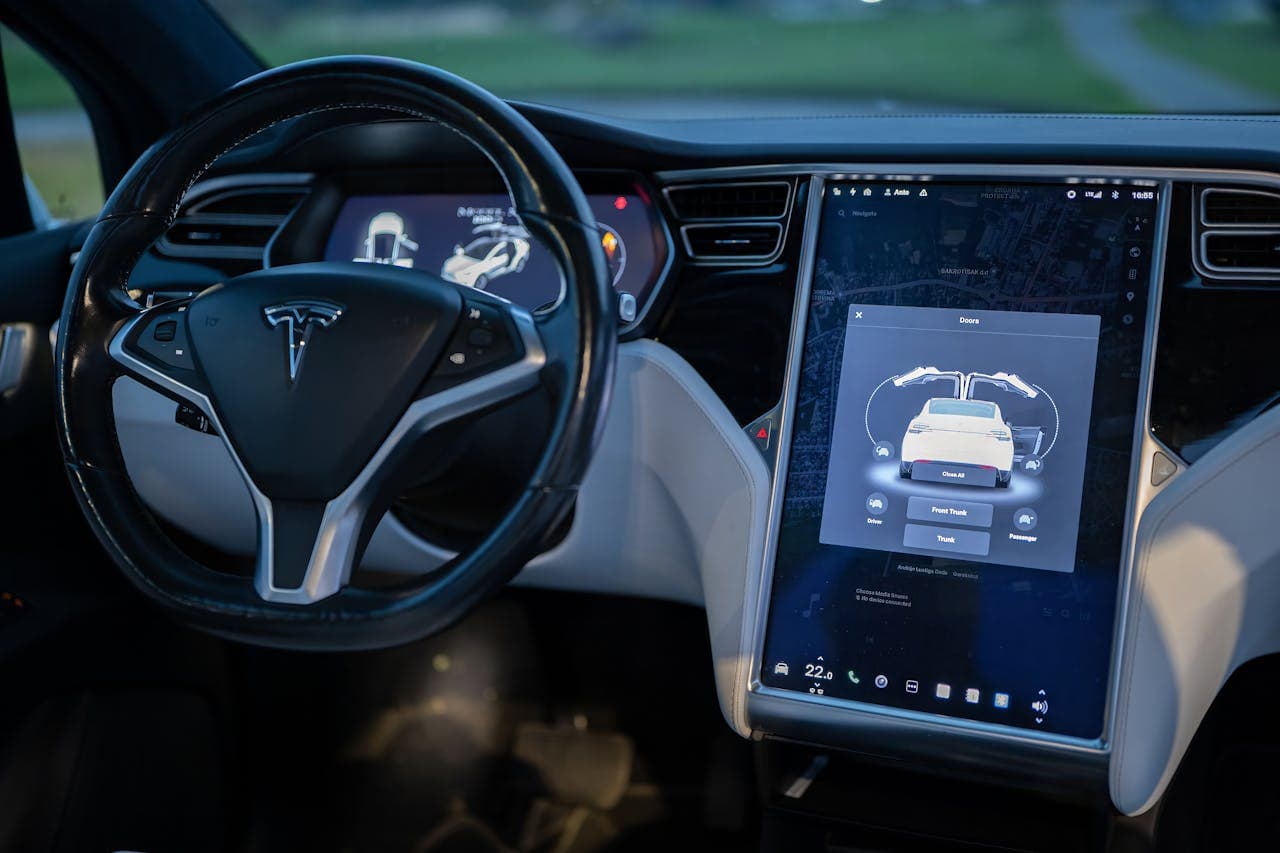
China Bans Hidden Electric Car Door Handles: What Tesla and EV Owners Need to Know
China becomes the first country to ban flush electric door handles on vehicles, citing safety concerns after fatal accidents. Learn how this groundbreaking regulation affects Tesla and other EV manufacturers, and what it means for global automotive safety standards.
Tesla Rolls Out FSD v14.2.2.4: What You Need to Know
Tesla continues to refine its Full Self-Driving (Supervised) software with the latest point release, FSD v14.2.2.4 (firmware version 2025.45.9). The update is currently expanding to users across the United States and Canada, marking another step forward in Tesla's autonomous driving capabilities.
Best Companies Offering Insurance Quotes Specifically for Electric Cars Like Tesla in 2026
Comprehensive guide to Tesla insurance costs and the best insurance companies for electric vehicles. Compare rates, understand how much is insurance for Tesla, and get accurate Tesla Model insurance quotes from top providers.