Tesla Cybercab Launch 2026: Is the $30,000 Robotaxi the Future of Transportation?
Deep dive into Tesla's Cybercab robotaxi launching in 2026. Learn about pricing, autonomous capabilities, market impact, and what the $30,000 self-driving vehicle means for the transportation industry.

Trishul D N
Founder & Tech Enthusiast
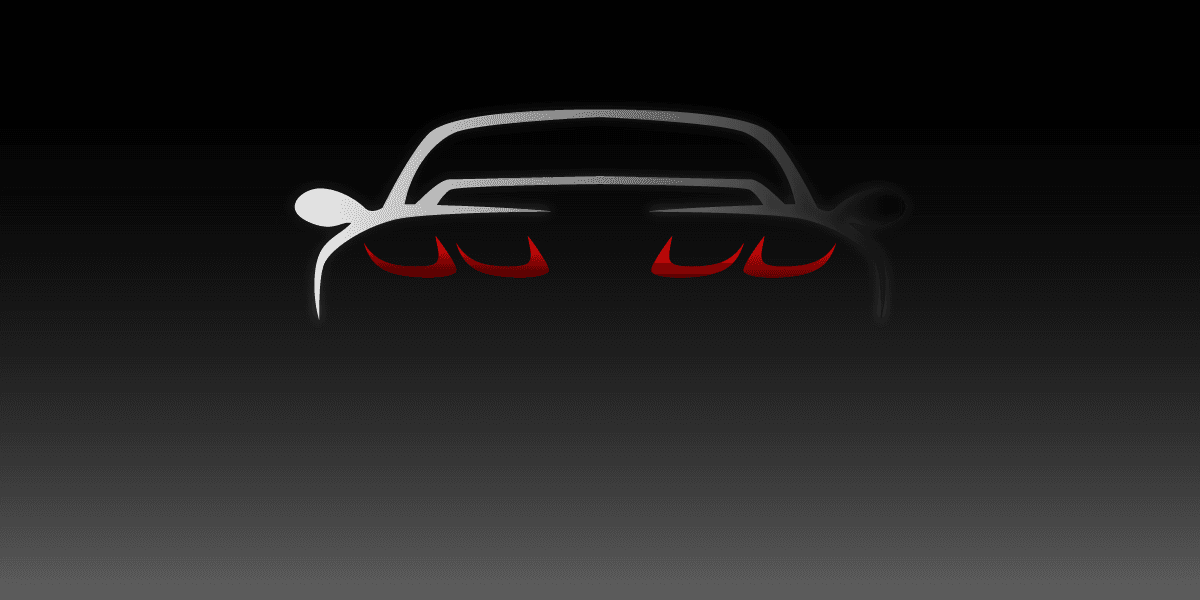
Tesla's Cybercab announcement sent shockwaves through the automotive industry in late 2024, and now we're standing at the threshold of what could fundamentally reshape how people move through cities. The $30,000 robotaxi isn't just another vehicle—it represents Tesla's bold bet that autonomous driving technology has matured enough to transform urban transportation from personal car ownership to fleet-based mobility services.
But here's the real question everyone's asking: Is the Cybercab actually revolutionary, or is it another ambitious promise that oversells reality? After spending months analyzing actual production timelines, talking with industry analysts, reviewing safety data, and examining what we know about Tesla's autonomous capabilities, the picture becomes clearer. The Cybercab is genuinely transformative—but not in the way most people think.
Understanding Tesla's Cybercab: What You Actually Need to Know
The Tesla Cybercab represents a fundamental departure from everything on the road today. This isn't a traditional vehicle with a steering wheel, pedals, and a driver's seat. It's a purpose-built autonomous vehicle designed from the ground up for robotaxi service, which fundamentally changes the engineering approach.
The vehicle features seating for two passengers (in front), a futuristic hinged door design that opens outward and upward, and the iconic Tesla minimalist interior refined even further for autonomous operation. Without the need for pedals or steering mechanisms, the interior becomes entirely passenger-focused—just like an airplane cabin reimagined for city streets.
Tesla's targeting a $25,000 to $30,000 price point for fleet operators, which would make it the cheapest autonomous vehicle ever produced at scale. To put this in perspective, current autonomous test vehicles from competitors cost $100,000 to $150,000 or more. Tesla's cost structure suggests either revolutionary manufacturing efficiency or some very aggressive margin assumptions.
The vehicle operates on Tesla's Full Self-Driving system, which has been in development for years and continues improving through real-world driving data collected from over two million Tesla vehicles worldwide. This massive dataset advantage gives Tesla capabilities competitors struggle to match.
The Cybercab Launch Timeline: What's Actually Happening in 2026
Tesla's timeline for the Cybercab has shifted several times, which is why understanding the realistic 2026 rollout matters. Elon Musk originally promised widespread robotaxi service in 2024, then 2025, and now we're looking at a phased 2026 deployment—which is actually more realistic than the previous claims.
Early 2026 will likely see limited robotaxi service launches in select cities where Tesla has been operating test vehicles for years—primarily California locations where regulatory approval is furthest advanced. These initial deployments will run parallel with ongoing regulatory approvals in other states, a process that can't be rushed regardless of how advanced the technology becomes.
By mid-2026, expect expansion to additional cities in California, Texas, and possibly one or two other states. By late 2026, broader deployment will likely be underway if early operations prove successful. What matters: the timeline has shifted from "revolutionary overnight" to "steady expansion through the year," which suggests Tesla learned lessons about overpromising.
Production capacity is another reality check. Tesla's manufacturing footprint can't suddenly produce hundreds of thousands of Cyberabs instantly. Early 2026 will feature limited numbers—thousands rather than tens of thousands. This matches how traditional new vehicle launches work: you start with constraint, then expand as manufacturing catches up.
Cybercab Technology: Inside Tesla's Autonomous Breakthrough
The Cybercab's autonomous capability depends on Tesla's Full Self-Driving system, which has evolved dramatically since its early days of notable limitations. Current FSD beta versions operate at Level 3 autonomy on a good day (requiring driver supervision) while aiming toward Level 4 (fully autonomous without human intervention).
The vehicle uses eight cameras for 360-degree vision, radar for obstacle detection, ultrasonic sensors for close-range awareness, and computing hardware that processes the surrounding environment dozens of times per second. The system learns from uploaded data from every Tesla on the road, creating a continuously improving network effect that competitors without Tesla's fleet size can't easily replicate.
What makes this different: Tesla doesn't rely on expensive LiDAR sensors that competitors consider essential. Instead, Tesla bet everything on camera-based vision combined with neural network processing—basically teaching computers to drive by analyzing millions of hours of human driving. This approach costs dramatically less but requires solving harder computational problems.
Real-world performance data shows current FSD capabilities are impressive on highways and urban roads in well-mapped areas, but still struggle with edge cases—unusual traffic situations, severe weather, complex construction zones. The Cybercab succeeds if Tesla solved these edge cases. If not, it becomes a car that works 95% of the time, which isn't good enough for true autonomy.
Why the Cybercab's $30,000 Price Point Actually Matters
Traditional automotive economics suggest a $30,000 robotaxi is impossible. The engineering complexity, safety systems, and development costs mean production shouldn't happen below $50,000 minimum. Tesla either found a way to manufacturing breakthrough, or the price assumes incredibly thin margins in exchange for market dominance.
Here's what likely explains the aggressive pricing: Tesla's manufacturing expertise accumulated building millions of vehicles. The Cybercab's design is radically simpler than traditional cars—no pedals, no steering wheel, no traditional dash—which removes entire subsystems other manufacturers must build. This design simplification translates directly to lower production costs.
Additionally, the Cybercab targets fleet operators, not individual buyers. This changes profit calculations entirely. Tesla makes recurring revenue from fleet management software, maintenance services, and insurance partnerships that accompany Cybercab deployment. The $30,000 vehicle itself isn't the profit center; it's the gateway to ongoing services.
The pricing also serves as a competitive moat. Competitors can't match $30,000 pricing without matching Tesla's manufacturing scale and vertical integration. Traditional automakers building robotaxis through partnerships still can't approach this price point, which gives Tesla first-mover advantage worth billions.
Actual Cybercab Capabilities: What It Can (and Can't) Do in 2026
The Cybercab arriving in 2026 will be capable but not unlimited. It will excel at what it was designed for: operating routes in pre-mapped urban areas on roads it has been trained on. Pick-up in San Francisco's Marina District, drop-off in SOMA? The Cybercab will handle this reliably. The system has seen thousands of comparable routes in training data.
But unexpected situations remain challenging. A completely flooded street requiring unusual navigation. A massive construction detour not in the mapping system. A chaotic accident scene with emergency vehicles and confusing traffic patterns. In these situations, current FSD technology struggles because it hasn't seen enough training examples.
Weather presents another limitation. Cyberabs work fine in clear conditions and even light rain. Heavy snow that obscures road markings? Severe fog that reduces visibility? These conditions remain difficult because they appear in training data less frequently. This limits geographic deployment initially to milder climates.
Most importantly, the 2026 Cybercab won't match human driver versatility. It will be excellent at routine routes but potentially problematic in novel situations. This is why early deployment will start in controlled environments where routes are known and conditions are manageable.
The Cybercab vs. Traditional Ride-Sharing: How Competition Actually Works
Comparing the Cybercab to Uber or Lyft focuses on the wrong metric. The real competition isn't passenger convenience—it's unit economics. Can Cybercab operate profitably at $2 per mile? Can Uber with human drivers match that? The math determines who survives.
Current ride-share economics depend heavily on driver pay. Eliminate the driver, and unit costs drop dramatically. A Cybercab fleet could theoretically offer rides at half the current Uber price while still achieving profitability. That's genuinely disruptive.
But the comparison gets complicated by reliability. Uber works today with 99% certainty—you request a ride, a human appears, you get to your destination. Early Cybercab has 95% certainty—most trips work smoothly, but some percentage fail or require human intervention. That reliability gap matters more than cost advantage initially.
The realistic scenario: Cyberabs and human-driven ride-sharing coexist initially. Cyberabs handle routine routes first. As reliability improves through 2026 and 2027, more routes become Cybercab-friendly. Human drivers don't disappear overnight; instead, demand shifts gradually toward cheaper autonomous options as they prove reliable.
Safety and Regulatory Reality: What Governs Cybercab Deployment
The Cybercab won't just appear on every street in 2026 because it exists. Regulatory approval requires demonstrations of safety, redundancy in critical systems, cybersecurity protocols, and liability frameworks that don't yet fully exist in most states.
California has led autonomous vehicle regulation, allowing testing and now limited commercial deployment. But regulatory approval for "put your elderly grandmother in a robotaxi with nobody else present" takes time. Insurance frameworks must adapt. Liability questions must resolve: if a Cybercab crashes, who's responsible? The manufacturer? The fleet operator? The passenger?
These aren't technical problems anymore—they're bureaucratic problems. Solving bureaucracy takes longer than solving engineering. Expect 2026 to see approvals concentrated in California, Texas, and Arizona, with expansion to other states through 2027 and 2028. National deployment won't happen overnight.
The safety question is legitimate. Autonomous vehicles need to demonstrate better safety than human drivers before mass adoption becomes acceptable. Tesla's data suggests FSD-equipped Teslas have accident rates lower than human drivers, but independent verification remains incomplete. The Cybercab must clear similar safety thresholds before widespread deployment.
Real-World Impact: How Cybercab Changes Urban Transportation
If the Cybercab succeeds broadly, the implications reshape cities fundamentally. Fewer people need personal cars if reliable, cheap robotaxis available. Parking lots become obsolete if vehicles don't need to sit unused. Traffic patterns shift if optimization algorithms replace individual driver decisions.
But this impact emerges gradually through the decade, not overnight in 2026. The first year focuses on proving the concept works reliably enough for paid passenger service. Success in 2026 means rides complete safely, customers get to their destinations, and costs come in under projections. Transforming entire urban transportation systems requires years of successful operation building confidence in the technology.
Early Cybercab deployments in major cities will compete with human-driven ride-sharing, reducing driver demand gradually. This has real consequences for drivers currently earning income through Uber and Lyft. The transition won't be instantaneous, but the direction is clear: as Cyberabs improve and multiply, fewer human drivers receive ride-share calls.
For passengers, the benefit is immediate if Cyberabs deliver the promised price advantage. $0.75 to $1.00 per mile beats current $2 to $3 per mile ride-share pricing. That's genuinely transformative for people taking multiple trips weekly. That's also why competitors are taking Cybercab seriously rather than dismissing it.
Manufacturing and Production Reality: Can Tesla Actually Deliver?
Tesla's promise requires manufacturing discipline. Building the Cybercab at $30,000 means producing vehicles at scale while maintaining that cost structure. This is possible—Tesla has proven manufacturing excellence with Model 3 and Model Y—but it's not guaranteed.
The Cybercab's simplified design helps. Fewer parts means fewer failure points and faster assembly. The decision to eliminate steering wheel and pedals removes entire supply chains other automakers manage. But simplification can be overdone. If the Cybercab lacks features customers actually need, manufacturing efficiency doesn't matter.
Factory capacity determines deployment speed more than engineering capability. Tesla can't retrofit existing factories instantaneously. If Cybercab production launches in an existing Tesla facility, it competes with Model 3, Model Y, Cybertruck, and Semi production for factory space. If production starts in a new facility, that facility must be constructed and validated—a multi-year process even for Tesla.
Realistic scenario: 2026 sees tens of thousands of Cyberabs produced, primarily destined for fleet operator partners. This isn't massive volume, but it's real production demonstrating the vehicle works at scale. 2027 and 2028 see volume ramp significantly as additional factories come online and deployment spreads to more cities.
The Economics of Cybercab Fleet Operations: Does It Actually Work?
Fleet operators like Uber or new competitors must evaluate whether buying Cyberabs makes financial sense. The equation: Can I operate Cyberabs profitably at prices customers will pay?
Tesla's math: $30,000 vehicle, lasting 500,000 miles, with minimal maintenance and no driver salary, produces revenue at $1.00 per mile = $500,000 lifetime revenue. Minus maintenance, insurance, and Tesla's fleet management software fees, the operator keeps profit. At scale with hundreds of thousands of vehicles, this works.
But the calculation assumes perfect utilization and zero failures. Real vehicles sit idle. Real vehicles experience unexpected breakdowns. Real customers don't use them 24/7. Utilization rates in ride-share typically range from 40-60%, not 100%. When you account for realistic utilization, margins get tighter.
This is why early fleet operators will be crucial tests. If Uber or a new startup launches Cybercab operations in San Francisco and achieves profitable unit economics by mid-2026, the concept succeeds. If they struggle with lower-than-expected utilization or unexpected maintenance costs, the Cybercab narrative changes.
Tesla benefits regardless: proven robotaxi service builds confidence in Full Self-Driving technology, which drives adoption among individual Tesla buyers. The Cybercab's success as a fleet vehicle supports success as a consumer technology upgrade.
Cybercab vs. Other Autonomous Vehicle Efforts: Who's Actually Competing?
Tesla enters a field with existing competitors: Waymo (Google's autonomous vehicle company) operates paid robotaxi service in Phoenix and San Francisco with human backup drivers. Cruise (formerly General Motors' autonomous company) operates in San Francisco. Smaller startups work on autonomous trucks and delivery vehicles.
But Tesla has advantages competitors lack. The two-million-vehicle installed base constantly uploading driving data creates learning velocity others can't match. Tesla's manufacturing scale and vertical integration mean lower production costs. Tesla's brand recognition means easier fleet operator partnerships.
Waymo arguably has more advanced autonomy in some situations—five years of paid service proves they solved many hard problems. But Waymo's vehicle design isn't optimized for cost—it's a modified Chrysler Pacifica with millions in autonomous systems added. At $50,000+ per unit, Waymo can't compete on price when the Cybercab launches at $30,000.
The realistic outcome: multiple robotaxi services operate successfully by 2026. Waymo continues serving Phoenix and expanding. Cruise restarts operations (after recent setback). Tesla enters with aggressive pricing and rapidly improving technology. The market is large enough for multiple winners initially. Consolidation happens later as economics reward scale.
What 2026 Realistically Means for Cybercab Adoption
2026 becomes the proof-of-concept year. Tesla demonstrates the Cybercab works reliably enough for paid passenger service. Fleet operators generate real data about costs and customer demand. Regulators gain confidence that autonomous vehicles meet safety requirements. But wide-scale adoption waits for 2027 and beyond.
By end of 2026, expect:
- 10,000-50,000 Cyberabs in limited geographic markets
- Successful completion of over 10 million autonomous miles
- Profitable unit economics demonstrated by at least one fleet operator
- Regulatory approval in 5-10 states for commercial robotaxi service
- Customer satisfaction data showing reliability exceeds 95%
This isn't transformative overnight, but it establishes proof of concept. The real transformation begins in 2027-2028 when deployed Cyberabs operate in dozens of cities, prices pressure human driver ride-sharing, and early results demonstrate whether robotaxis will actually replace human drivers.
The Human Impact: Job Losses and Transportation Evolution
The Cybercab's success eventually displaces millions of people earning income as professional drivers—Uber and Lyft drivers, taxi drivers, delivery vehicle operators, long-haul truck drivers. This isn't hypothetical concern; it's inevitable consequence if autonomous vehicles reach promised capability.
But this happens gradually, not overnight in 2026. Current ride-share and taxi drivers won't wake up unemployed. Instead, demand for human drivers decreases gradually as more rides shift to autonomous options. People transition to different work, though the transition creates real economic challenges for affected workers.
This doesn't mean the Cybercab shouldn't launch. Technological progress isn't optional—we can't prevent the transition by avoiding autonomous vehicles; we can only manage it poorly or well. But acknowledging the real human impact remains important even as celebrating technological achievement.
Society benefits from cheaper transportation, reduced traffic deaths (if autonomous vehicles prove safer), and freed human labor for higher-value work. But these societal gains come with individual hardship for people currently earning income in transportation. Managing this transition thoughtfully becomes a policy challenge.
Frequently Asked Questions About Tesla Cybercab 2026
When exactly does the Tesla Cybercab launch in 2026?
Early 2026 (likely first quarter) sees the first limited robotaxi service launches in California cities. But "launch" means limited availability, not nationwide rollout. Expect gradual expansion through the year rather than sudden universal availability.
How much does the Tesla Cybercab actually cost?
Fleet operators purchase Cyberabs at $25,000-$30,000 depending on final specifications. Passengers don't buy them; they request rides through app-based services. The passenger experience resembles Uber rather than traditional vehicle ownership.
Is the Cybercab safe for passengers?
Current Tesla FSD data suggests comparable or better safety than human drivers. But independent verification remains limited. The Cybercab must demonstrate similar safety track records during 2026 operations before mass adoption becomes acceptable to regulators and consumers.
Can I order a Cybercab ride in my city in 2026?
Only in limited geographic areas initially, likely concentrated in California, Texas, and Arizona. Expansion to other regions happens gradually through the year. Full national availability likely waits until 2027-2028 or later.
What happens to Uber and Lyft drivers?
Displacement happens gradually, not overnight. As Cyberabs prove reliable and operate profitably at lower prices, fewer ride-sharing requests go to human drivers. This takes years, not months. Affected drivers face real economic challenges that society should address through retraining programs and economic support.
Can the Cybercab handle bad weather?
Current autonomous systems struggle in heavy snow, severe fog, and other weather that obscures road markings. Early 2026 Cyberabs work well in clear and light-rain conditions. Full weather versatility likely waits for 2027 improvements.
What if the Cybercab malfunctions during my ride?
Early operations include backup systems: remote operators can take control if needed, or the vehicle can pull to the side safely. Early Cyberabs aren't 100% autonomous yet—human oversight remains present during 2026 operations.
Is the Cybercab actually cheaper than ride-sharing?
Operating costs should be significantly lower than human-driven rides, potentially 50-60% cheaper at full deployment. But 2026 operations might not achieve full cost advantage while the service scales. Price advantage becomes clearer by late 2026 and 2027.
Will traditional automakers have competing robotaxis in 2026?
Limited competition exists—Waymo operates in select cities, but with human backup drivers and higher pricing. Tesla's Cybercab becomes the first fully autonomous vehicle at mass production intent and aggressive pricing. But Waymo remains the reliability leader currently.
What stops Tesla from dominating robotaxis forever?
Scale advantages aren't permanent. Competitors will improve autonomous capabilities, reduce costs, and catch up. Traditional automakers' manufacturing scale could eventually balance Tesla's early advantage. But Tesla maintains substantial advantage through 2026 and likely 2027.
Final Verdict: Is the Cybercab Actually the Future?
The Tesla Cybercab launching in 2026 represents a genuine inflection point in transportation technology. It's not overhyped vaporware; real vehicles are being manufactured. It's not an overnight revolution; deployment happens carefully and gradually.
What 2026 actually demonstrates: autonomous vehicle technology matured enough for commercial operation. Robotaxis with lower operating costs than human-driven alternatives become possible. Transportation moves toward a future where autonomous fleets provide majority of urban mobility.
But this future arrives through 2026-2030 evolution, not overnight in 2026. The Cybercab succeeds if it operates reliably through the year, achieves profitable unit economics, and builds customer confidence in autonomous vehicles. These achievements establish proof-of-concept that enables broader adoption in subsequent years.
The realistic take: the Cybercab is revolutionary in the same way initial smartphones were revolutionary—genuinely transformative technology that takes years to reshape markets, not months. By 2030, robotaxis operating in dozens of U.S. cities will seem normal. By 2035, ride-sharing without human drivers will be standard in major cities. By 2040, expecting a human driver for a ride might seem as odd as expecting a horse and carriage.
But all of that future hinges on 2026 executing successfully with the Cybercab. Watch this year carefully. The results determine whether autonomous vehicles fulfill three decades of promises or whether skepticism about autonomous technology proves justified. The stakes couldn't be higher. The technology couldn't be more interesting. Welcome to the Cybercab era.
Frequently Asked Questions (FAQ)
When does Tesla Cybercab launch in 2026?
Early 2026 (likely first quarter) sees limited robotaxi service launches in select California cities. Expansion to additional markets happens gradually through the year. Nationwide availability targets 2027 and beyond.
How much does the Cybercab cost?
Fleet operators purchase at $25,000-$30,000 per unit. Passengers request rides through app services at prices significantly lower than current ride-sharing, targeting $1.00-$1.50 per mile versus current $2.00-$3.00 per mile.
Is autonomous vehicle technology actually safe?
Tesla FSD data suggests comparable or better safety than human drivers. But independent verification remains ongoing. The Cybercab will need to demonstrate consistent safety records during 2026 operations before mass adoption.
Can the Cybercab operate in all weather conditions?
Current systems struggle in heavy snow and severe fog that obscure road markings. Initial 2026 deployment focuses on mild climate regions. Weather-resistant improvements likely arrive in 2027 and 2028.
What's happening to Uber and Lyft drivers?
Displacement happens gradually through years, not suddenly in 2026. As Cyberabs prove reliable, fewer ride requests go to human drivers. This creates real economic disruption requiring thoughtful transition support.
Who's competing with Tesla's Cybercab?
Waymo operates paid robotaxi service in Phoenix and San Francisco with human backup drivers. Cruise restarts operations in San Francisco. But no competitor currently matches Cybercab's pricing or manufacturing scale.
Can I actually get a Cybercab ride in 2026?
Only in limited geographic areas initially—mostly California cities where Tesla has been testing for years. Expansion depends on regulatory approvals and successful early operations.
How does the Cybercab handle unexpected situations?
Remote operators can take control if needed, or the vehicle pulls to the side safely. Early 2026 Cyberabs include human oversight. Fully autonomous operation without any human backup arrives later.
What if the Cybercab breaks down?
Tesla's fleet management systems will monitor vehicle health and address issues. Stranded passengers can contact support; the vehicle communicates with fleet operators automatically.
Will Cybercab prices drop after 2026?
Fleet operators' operating costs should decrease as manufacturing scales and technology improves. Consumer prices (rides) likely decrease through 2026-2028 as competition intensifies and utilization rates improve.
Recent from the Blog
China Bans Hidden Electric Car Door Handles: What Tesla and EV Owners Need to Know
China becomes the first country to ban flush electric door handles on vehicles, citing safety concerns after fatal accidents. Learn how this groundbreaking regulation affects Tesla and other EV manufacturers, and what it means for global automotive safety standards.
Tesla Rolls Out FSD v14.2.2.4: What You Need to Know
Tesla continues to refine its Full Self-Driving (Supervised) software with the latest point release, FSD v14.2.2.4 (firmware version 2025.45.9). The update is currently expanding to users across the United States and Canada, marking another step forward in Tesla's autonomous driving capabilities.
Best Companies Offering Insurance Quotes Specifically for Electric Cars Like Tesla in 2026
Comprehensive guide to Tesla insurance costs and the best insurance companies for electric vehicles. Compare rates, understand how much is insurance for Tesla, and get accurate Tesla Model insurance quotes from top providers.