The Ultimate Tesla Maintenance Guide

The Ultimate Tesla Maintenance Guide

A deep dive into keeping your generic reliable vehicle running for 500,000 miles.

The "Zero Maintenance" Myth

One of the greatest selling points of the modern electric vehicle is the promise of simplicity. No oil changes. No spark plugs. No timing belts. No transmission fluid flushes. No exhaust mufflers to rust out. It is a seductive narrative: buy the car, charge it like a phone, and drive it forever.

However, experienced Tesla owners know that "Low Maintenance" does not mean "No Maintenance."

While you have eliminated the internal combustion engine—the most complex and fragile part of a traditional car—you have replaced it with a high-voltage architecture, advanced thermal management systems, and suspension components that are subjected to brutal physics. A Tesla Model Y Performance, for instance, weighs nearly 4,500 pounds and can accelerate from 0 to 60 mph in 3.5 seconds. That combination of massive weight and instant torque puts unprecedented stress on tires, bushings, and control arms.

Neglecting these specific EV wear items doesn't just reduce efficiency range; it effectively destroys the vehicle's longevity. This guide is not just a checklist. It is a comprehensive manual on the physics of Tesla ownership. We will break down exactly what breaks, why it breaks, and how you can prevent it.

Chapter 1

The Rubber Meets the Road: Tires & Suspension

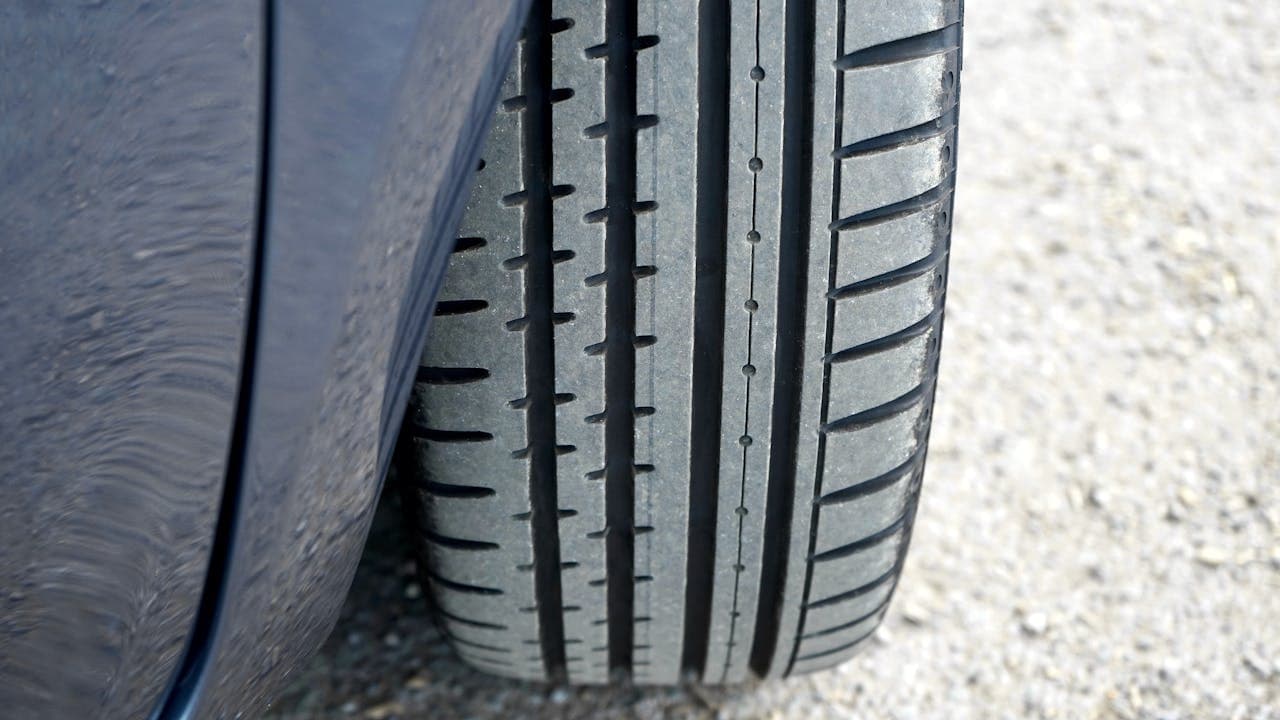
If there is one "Achilles Heel" of the electric vehicle experience, it is tire life. It is not uncommon for new Tesla owners to be shocked when their factory tires are completely bald after just 15,000 or 20,000 miles. Coming from a Honda Civic or Toyota Camry where tires might last 50,000 miles, this can feel like a defect. It isn't. It's physics.

Tesla Tires and Suspension Maintenance

Why EVs Eat Tires

Three factors conspire to destroy your rubber: Weight, Torque, and Regeneration. First, the battery pack makes your Tesla significantly heavier than a gas car of the same size. That weight increases friction and heat generation during every corner. Second, the instant torque of an electric motor applies shearing force to the tread block immediately, rather than building up gradually like a gas engine. Even if you aren't "flooring it," normal EV acceleration is aggressive by historical standards.

Finally, Regenerative Braking means your tires are constantly under load. In a gas car, when you lift off the gas, you coast. The tires relax. In a Tesla, when you lift off, the motor becomes a generator, applying reverse torque to slow the car. This means the tire allows for almost zero "recovery time" during city driving. It is always working, either pushing or pulling.

The Solution: Aggressive Rotation

Because of this constant work, uneven wear is accelerated. On Rear-Wheel Drive models, the rear tires are doing all the propulsion and the vast majority of the regenerative braking, chewing them up twice as fast as the fronts. On Dual Motor models, the wear is more balanced but still prone to "cupping" on the inside edges due to the negative camber settings Tesla uses for stability.

The only defense is a strict rotation schedule. Tesla recommends rotating every 6,250 miles. We recommend doing it even sooner—every 5,000 miles—if you drive a Performance model. This ensures that each tire spends time on each corner of the car, balancing out the specific wear patterns of propulsion (rear) and steering (front). Skipping a single rotation interval can be the difference between getting 20,000 miles or 40,000 miles out of a $1,500 set of Michelin Pilot Sports.

Deep Dive: The Alignment Issue

A common issue, particularly on the Model 3 and Y, is "phantom alignment drift." Because the car is heavy and the torque is high, the factory suspension bolts can potentially shift slightly over time, or the rubber bushings can compress. This leads to the car having too much "Toe Out," which scrubs the inside edge of the tires.

We rely on a visual check. Turn your wheel all the way to the lock and inspect the *inner* edge of the front tire. If you see cords or smoothness there while the outer edge looks new, you have an alignment problem. Get it fixed immediately, or you risk a blowout.

Chapter 2

The Heart of the Beast: Battery Health & Longevity

The High Voltage (HV) Battery is the single most expensive component in your vehicle. Replacing it out of warranty can cost upwards of $12,000 to $16,000. Naturally, "Battery Health" is the source of significant anxiety for new owners. The good news is that Tesla's thermal management system is world-class, and catastrophic failures are rare. The bad news is that degradation is real and unavoidable.

Understanding Degradation (The Bathtub Curve)

All Lithium-Ion batteries degrade. It is a chemical certainty. However, they do not degrade in a straight line. Most owners experience a "steep drop" in the first year or 20,000 miles—often losing 5% to 8% of their rated range. This is the "break-in" period where the chemical lattice settles.

After this initial drop, the degradation curve flattens out remarkably. It is common for a Tesla to lose 10% range in the first 3 years, but then only another 5% over the next 5 years. Many high-mileage Teslas with 200,000 miles still retain 85% of their original capacity. Do not panic when you see that first chunk of range disappear; it is normal behavior.

The "ABC" Rule: Always Be Charging

The single best thing you can do for your battery is to keep it plugged in. This notion confuses people who are used to phone batteries, which we are told to let drain. A Tesla provides a different challenge: it has complex background computers and thermal pumps that run 24/7.

If the car is unplugged, it must pull power from the main pack to run these systems (Vampire Drain), which causes unnecessary micro-cycles. If it is plugged in (even to a slow 120V outlet), the car draws "shore power" to run its brains and heaters, letting the battery sleep peacefully. A happy battery is a sleeping battery.

The Truth About 100% Charging

Should you charge to 100%? It depends entirely on your battery chemistry.

  • NCA / NCM Batteries (Long Range / Performance Models)These nickel-based chemistries provide high energy density but are chemically stressed at high voltages. Sitting at 100% state-of-charge causes dendrite formation, which permanently reduces capacity. Daily Limit: 80%. Trip Limit: 100% (but drive immediately).
  • LFP Batteries (Standard Range / RWD Models)Lithium Iron Phosphate batteries are heavier and less energy-dense, but they are chemically robust. In fact, they need to be charged to 100% regularly towards the voltage calibration buffer properly. Daily Limit: 100%.
Chapter 3

The Forgotten Fluids: Brakes & Coolant

Just because there is no engine oil doesn't mean your Tesla is "dry." It relies heavily on several critical hydraulic systems.

Brake Fluid is Hydroscopic

This is the most overlooked safety item on EVs. Because of regenerative braking, you rarely use your physical friction brakes. This sounds like a good thing (your pads last forever), but it creates a hidden danger.

Brake calipers need to get hot to boil off moisture that accumulates in the fluid. In a Tesla, the brakes often stay cold for weeks at a time. This allows water to accumulate in the brake lines, which can corrode the expensive ABS module or, in a panic stop situation, boil instantly and cause total brake fade. Tesla mandates a brake fluid test every 2 years. Do not skip this.

The "Octovalve" and Coolant

Your car has a "Superbottle" (older models) or a "Manifold" (Octovalve models) that directs coolant to the battery, the motors, and the computer. This coolant is generally considered a "lifetime" fill, but levels should be checked. If you get a "Low Coolant" warning, it is critical. Do not drive. A dry inverter will fail in seconds.

Chapter 4

Environment & The dreaded "Tesla Smell"

One day, you will turn on your AC and be greeted by the scent of old gym socks. This is a design quirk of the Model 3 and Model Y. The air intake is positioned in a way that allows moisture to pool near the condenser, creating a perfect breeding ground for mold and bacteria.

The Maintenance Fix

Replacing the filters is not enough. You must clean the evaporator coils. This involves removing the passenger footwell panels (T20 screwdriver required) and injecting a foaming evaporator cleaner (like Kool-It) directly onto the coils.

Pro Tip: To prevent this, turn off "Cabin Overheat Protection" (A/C Mode) if you park in a garage, as this constant cycling creates condensation that never dries out. Alternatively, enable "After-blow" logic via service mode if available, which runs the fan for 2 minutes after a drive to dry the coils.

The 12V Battery Time Bomb

Ironically, the most common reason a Tesla gets towed is not the massive high-voltage battery running out, but the tiny 12V lead-acid battery dying. This small battery powers the lights, the locks, the screen, and—crucially—the main contactors that connect the big battery. If the 12V dies, the car is a brick. You cannot open the doors. You cannot drive.

Lead-Acid (Pre-2022): Expect to replace this every 3-4 years. The car will usually give a warning ("12V Battery Needs Service") a week before it dies. Do not ignore it.

Lithium-Ion (2022+): Newer Teslas use a 16V Lithium-Ion low-voltage battery. These are designed to last the life of the car and essentially solve this issue permanently.

Recommended Maintenance Schedule

IntervalAction ItemWhy it mattersEst. Cost
MonthlyCheck Tire Pressures
42 PSI (Cold)
Prevents blowout & maximizing range.$0
MonthlyWasher Fluid Top-up
Use -20°F rated in winter
Autopilot cameras blinded by dirty glass.$4
6,250 MilesTire Rotation
Critical Service
Doubles tire lifespan. Fixes uneven EV wear.$50 (or Free)
12,500 MilesWiper Blades
Replace rubber inserts
Streak-free clearing for Vision cameras.$30
2 YearsCabin Air Filters
HEPA + Carbon
Prevents mold/mildew smell in cabin.$60
2 YearsBrake Fluid Test
Test for moisture content
Safety critical. Prevents caliper corrosion.$150
4 YearsA/C Desiccant Bag
Replace dryer bag
Keeps A/C compressor efficient.$250